2.5 Ton Pay Load : Best Mini Truck in India
If your routes are mostly intra-city with frequent loading/unloading, a Mahindra pickup or a short-wheelbase Tata/Eicher LCV specified for 2.5 tonnes may balance cost and fuel economy. For mixed duties or heavier bodies, step up to the more powerful Eicher/Tata 4–5t GVW variants. Always negotiate on warranty, roadside assistance and finance quotes — even a 0.5–1% interest-rate difference on an ₹8 lakh loan changes your monthly EMI by a noticeable amount. Run the total-cost-of-ownership numbers (loan cost + fuel + maintenance + downtime) rather than just the ex-showroom price — that’s where profit in trucking really lives.
10/24/20254 min read
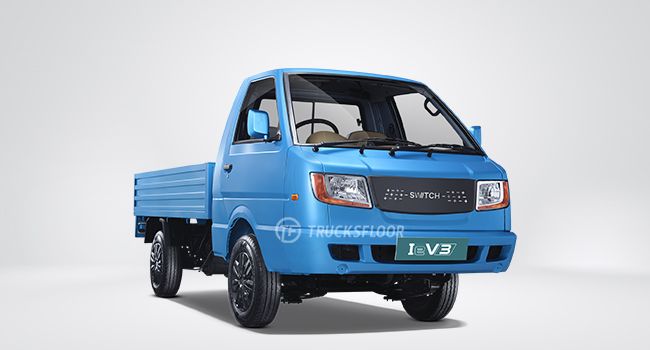
Light-commercial trucks with roughly 2.5 tonnes of payload sit at the sweet spot between city last-mile delivery and short-haul distribution. From Tata and Mahindra to Eicher and Ashok Leyland, manufacturers are sharpening their lineups for traders, small logistics firms and mandi-haulers who want a rugged, fuel-efficient vehicle without the operating costs of heavier trucks. Here’s a concise market update on models, prices, driveline and — critically for operators — finance, fuel economy and durability.
Market & price snapshot
In today’s market the 2.5-to-5 tonne GVW (gross vehicle weight) band — which includes many models that can carry around 2.5 tonnes of payload depending on configuration — shows wide price dispersion driven by brand, body length and emissions/comfort upgrades. Entry LCVs start in the ₹5–8 lakh range for smaller, simpler body variants, while better-equipped 2.5-tonne class trucks (longer wheelbase, stronger axles, bigger engines) typically fall in the ₹9–13 lakh bracket; specialized or premium variants can go higher. Aggregator price lists and dealer portals show the segment spanning roughly ₹6.5 lakh up to ₹14 lakh+ depending on make and state taxes. Tractor Junction Trucks+1
Which models to watch
Manufacturers offer several mainstream choices for operators targeting ~2.5-tonne payloads:
Tata 407 (Gold SFC and similar variants) — a long-standing favourite in intra-city and feeder routes. The 407 line in heavier GVW variants is often configured to deliver payloads near 2.3–2.6 tonnes and remains priced competitively in the mid-to-low LCV band. TruckDekho+1
Eicher Pro 2049 / Pro series — positioned as a modern LMD (light-medium duty) truck; GVW options and variants make it a common pick for customers needing 2.5-tonne class loading with improved driver comfort and fuel economy. TruckDekho+1
Mahindra Bolero Pik-Up / Maxi-truck family — several variants (Bolero Pik-Up Extra-Long, Maxi Truck Plus) target payloads in the 1.7–2.7 tonne range; these are popular in rural and semi-urban segments for their simple mechanics and serviceability. Tractor Junction Trucks+1
Ashok Leyland (Dost, Bada Dost) and other makers (Force, Isuzu, BharatBenz) also field models in the sub-5t GVW band that can be specified for ~2.5-tonne payloads depending on axle and body choices. Tractor Junction Trucks
Driveline & features: what buyers actually get
Across the board buyers will find conventional diesel powertrains (BS-VI compliant), manual 5-speed (or 6-speed in larger GVW variants) gearboxes, leaf-spring rear suspensions for load-bearing, heavy-duty axles and drum (most models) or disc brakes on front axles. Power figures vary from ~75–110 hp for pickups and small LCVs up to 120–150 hp for better-equipped 3–4.5-tonne GVW trucks. Features that matter to fleet buyers now include strengthened chassis rails, larger fuel tanks for longer range, dual-battery electrical systems and basic driver ergonomics (tilt steering, comfortable seats, charging points). Spec sheets on manufacturer/dealer portals list these differentials clearly and explain how wheelbase/body choices change payload. TruckDekho+1
Mileage (real and ARAI figures)
Fuel efficiency in this band is highly load- and duty-cycle sensitive, but benchmark ARAI-type or quoted mileages give useful expectations:
Small pickups like the Mahindra Bolero Pik-Up typically quote ~14 kmpl under standard test conditions.
LMD trucks such as the Eicher Pro 2049 generally quote around 10–11 kmpl; Tata 407 variants often report roughly 7–10 kmpl depending on configuration and operating load.
Operators should budget for lower real-world figures when vehicles run full loads, stop-start city routes or hilly terrain; real returns often fall 10–30% below quoted numbers. CarDekho+2TruckDekho+2
Funding & interest rates (how much and how expensive)
Commercial vehicle financing is widely available from national banks, NBFCs and captive financiers. Key points for buyers:
Most lenders will finance new CVs up to 80–100% of chassis/on-road price (some banks finance body conversion too, subject to limits). Tenures commonly range up to 60–84 months depending on vehicle type and lender policy. Processing fees and margins (borrower contribution) vary — public bank schemes may ask for ~10–15% margin for certain loans. State Bank of India+1
Interest rates depend on credit profile and whether the loan is to an individual owner-operator or a firm. Published market ranges for CV loans in 2025 show roughly 7.5% p.a. (best case on select schemes) up to mid-teens (12–16%+) for used vehicles or higher-risk borrowers. NBFCs may quote still higher rates for used vehicle finance. Buyers should compare SBI/PSB schemes, HDFC/ICICI offers and specialised NBFCs; small differences in rate materially change monthly EMI for an ₹8–10 lakh truck over 5 years. BankBazaar+1
Durability & service economics
Durability in the 2.5-tonne lane is driven by chassis strength, axle ratings and service support. Tata, Eicher and Mahindra emphasise reinforced frames and proven aggregate parts; their large service networks reduce downtime and, in many cases, lower life-cycle cost even if initial prices are similar. For high-utilisation fleets, operators should prioritise: routine maintenance contracts, availability of local spare parts, and the vehicle’s reputation for gearbox and axle longevity (the two most expensive failure modes). Independent workshops often service older models economically, but buying from a brand with a wide dealer footprint usually shortens repair turnaround. Tata Motors Trucks+1
Bottom line for buyers
If your routes are mostly intra-city with frequent loading/unloading, a Mahindra pickup or a short-wheelbase Tata/Eicher LCV specified for 2.5 tonnes may balance cost and fuel economy. For mixed duties or heavier bodies, step up to the more powerful Eicher/Tata 4–5t GVW variants. Always negotiate on warranty, roadside assistance and finance quotes — even a 0.5–1% interest-rate difference on an ₹8 lakh loan changes your monthly EMI by a noticeable amount. Run the total-cost-of-ownership numbers (loan cost + fuel + maintenance + downtime) rather than just the ex-showroom price — that’s where profit in trucking really lives.