5 Ton Pay Load : Price? Models? Engine Capacity? Milage?
The segment is served by the marquee CV makers — Tata Motors, Ashok Leyland, Eicher, Mahindra and BharatBenz — plus several regional body builders. Prices depend on GVW, body fitment and state taxes, but competing models typically sit in the ₹12–22 lakh (ex-showroom) bracket for new 4x2, 5-ton class trucks. For example, Eicher’s Pro-2049 (sub-5-ton) lists from around ₹12.2 lakh, while Tata’s LPT 510 — a popular 5.5-ton package — is positioned in the mid-teens. Ashok Leyland’s Partner series offers competitive pricing closer to the lower teens, aimed at cost-conscious buyers. These price points are influenced by periodic manufacturer hikes announced in 2024–25 as commodity and supply costs rose.
10/25/20253 min read
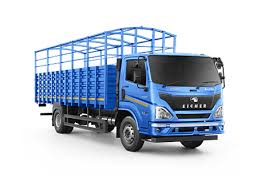
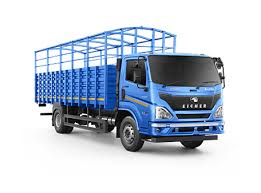
India’s light-to-medium commercial vehicle market is seeing renewed attention on the 5-ton payload class — the workhorse segment used by FMCG distributors, last-mile logistics players and small fleet owners. Over the last 12–18 months manufacturers have refreshed lineups, sharpened features and leaned on dealer-financing partners to make acquisition easier for owner-operators. Here’s the snapshot buyers need: who’s selling what, how much it costs, what’s under the hood, and how buyers are paying for these trucks today.
Models and prices: familiar names, narrower gaps
The segment is served by the marquee CV makers — Tata Motors, Ashok Leyland, Eicher, Mahindra and BharatBenz — plus several regional body builders. Prices depend on GVW, body fitment and state taxes, but competing models typically sit in the ₹12–22 lakh (ex-showroom) bracket for new 4x2, 5-ton class trucks. For example, Eicher’s Pro-2049 (sub-5-ton) lists from around ₹12.2 lakh, while Tata’s LPT 510 — a popular 5.5-ton package — is positioned in the mid-teens. Ashok Leyland’s Partner series offers competitive pricing closer to the lower teens, aimed at cost-conscious buyers. These price points are influenced by periodic manufacturer hikes announced in 2024–25 as commodity and supply costs rose. TruckDekho+2TruckDekho+2
Features and cabins: comfort creeping in
What used to be purely “utility boxes” now come with driver-friendly touches: tilt-adjust steering, improved seats with lumbar support, digital instrument clusters on higher trims, and better cabin insulation for highway duty. Manufacturers emphasise modular bodies (box, tipper, refrigerated) and dealer network fitment so fleet managers can buy a chassis-cab and get a factory-approved body locally. Eicher’s marketing highlights fuel-efficiency and a comfortable cabin as selling points for urban, last-mile operations. eichertrucksandbuses.com
Driveline and emissions: BS-VI diesel still dominant, transmissions steady
Most 5-ton trucks in India continue to use BS-VI-compliant diesel engines delivering between roughly 75–125 hp and torque optimized for low-speed hauling (peak torque in the 250–400 Nm band depending on model). Typical drivetrains are 4x2 axle configurations mated to 5- or 6-speed manual gearboxes; fully automatic options are extremely rare at this GVW. Manufacturers tout heavy-duty ladder frames, reinforced axles and multi-leaf springs (or parabolic springs on premium trims) for load durability. These driveline choices prioritise torque, serviceability and long life over outright speed. TruckDekho+1
Mileage and operating cost: realistic expectations
Real-world mileage for 5-ton payload trucks varies widely with load, route profile and driving style. On mixed city-highway duties buyers can expect around 7–10 km per litre for many diesel-powered 4x2 models — manufacturers often quote optimistic figures but fleet operators focus on operating cost per km, factoring in maintenance and tyre life. Eicher and Tata literature position their sub-5-ton models as “best-in-class” performers for fuel economy in their marketing materials. TruckDekho+1
Durability and after-sales: warranties and uptime focus
Durability remains a headline concern for fleet owners. OEMs emphasise robust frames, proven drivetrains and scheduled maintenance packages. Extended warranty options and service contracts are common upsells; dealer networks across tier-2 and tier-3 towns are a major purchasing consideration because uptime equals revenue for small fleets. Independent service cost differences between brands can swing total cost of ownership significantly over three-to-five years. eichertrucksandbuses.com
Funding and finance: easy to get, but rates vary
Buying a 5-ton truck is commonly financed. Banks and NBFCs — SBI, HDFC Bank, Axis, IDFC First, and specialist lenders such as Shriram Finance and Mahindra Finance — routinely offer commercial vehicle loans. Typical loan features: financing up to 85–100% of the on-road cost (dealer and lender dependent), tenures up to 84 months for new CVs, and moratorium options in select schemes. Interest rates depend on credit profile, asset age (new vs used) and lender; prevailing ranges for commercial vehicle loans in recent months have broadly sat between ~8% at the best end to mid-teens (or higher) for riskier profiles, with many borrowers seeing rates in the 9–12% band for new vehicles with good credit. Processing fees and margins vary by bank/NBFC. State Bank of India+2Moneyview+2
What buyers should compare
Total cost of ownership (purchase price + estimated fuel + maintenance + tyre + insurance) over 3–5 years — not just ex-showroom price.
Dealer & service network in operating regions — faster repairs = less downtime.
Finance offer details (interest type fixed vs floating, processing fee, prepayment charges, required margin). Several OEMs run co-branded finance schemes (Tata Finance, Mahindra Finance) with attractive down-payment and EMI bundles — always compare against independent NBFC quotes. Mahindra Finance+1
Bottom line
The 5-ton payload market in India is mature but competitive: manufacturers are improving cabins and drivetrains while financing partners make acquisition simpler. For buyers the smart play is to model operating costs carefully — a slightly higher-priced truck with better fuel economy, wider dealer support and a low-cost finance package can be cheaper over a three-year cycle than the cheapest up-front option. With interest rates stabilising in a broad 8–16% band for commercial vehicle loans and OEMs offering tailored finance, now is a good window for expanding fleets — provided operators do the math on uptime, fuel and servicing before sealing the deal. TruckDekho+1