7.5 Ton Pay Load : Best Vehicle in India
As OEMs refresh mid-duty portfolios with cleaner engines, more connected telematics and targeted finance offers, the 7.5-tonne segment looks set to remain the backbone of intra-state freight in India. For the immediate future, operators will continue to balance acquisition cost, fuel economy and durability — and those who get all three right will retain an edge in a market where margins are thin and uptime matters most.
10/24/20253 min read
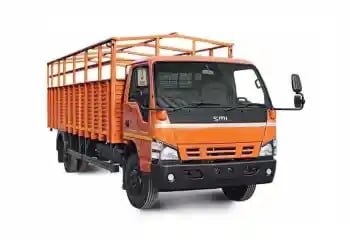
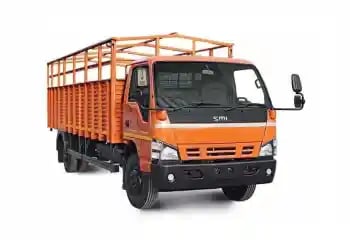
India’s crowded medium-truck segment — commonly referred to as the “7.5-tonne” or 5–10 tonne GVW class — is seeing renewed attention from fleet owners and small traders as the economy rebalances and freight demand stabilises. Makers from legacy domestic names to newer OEMs are sharpening their lineups around payload, driveline options, fuel economy and flexible finance to capture buyers who want a durable workhorse without ballooning operating costs. Trucksfloor+1
Market leaders and model prices
Tata, Eicher, BharatBenz, Mahindra and Ashok Leyland remain the most visible contenders in this mid-duty band. Tata’s 712/1212 series and related LPT models are pitched as multi-purpose work trucks in this class, with ex-showroom asking prices commonly reported in the ₹17–20 lakh band for fully-built variants — a range that places them squarely at the heart of goods distribution and construction applications. TruckDekho
BharatBenz’s 1215R — a frequently chosen 7–8 tonne GVW option when dressed as a cargo or tipper — lists around the high-teens (roughly ₹18–20 lakh ex-showroom) depending on axle, body and regional taxes. Eicher and Mahindra’s medium-duty offerings (Eicher Pro series and Mahindra Furio 7) fill out the segment with competitive pricing: Mahindra’s Furio 7 is advertised in the ₹15–16 lakh bracket and targets operators seeking lower acquisition cost and good fuel efficiency for last-mile and regional hauling. Tractor Junction Trucks+2Tractor Junction Trucks+2
Driveline, engines and mileage expectations
Across the segment, the technical story is conservative: turbo-diesel engines in the 3.0–4.0-litre range that deliver torque for loaded climbs, paired to manual gearboxes (6–8 speeds) remain the default. Several manufacturers now offer AMT or automated clutch options on specific variants to reduce driver fatigue and improve city stop-start efficiency, but manual boxes still dominate for rugged highway/mixed duties.
Real-world mileage for 7.5-tonne trucks varies with load, route and body type. OEM listed figures and dealer resources generally place optimistic fuel economy around 8–12 kmpl for lighter, better-spec’d units (Furio 7 lists around 9–10 kmpl in some spec sheets), while tippers and heavy-body variants operating at higher payloads will commonly see lower figures. Fleet buyers treat published mileage as indicative rather than guaranteed and budget on conservative numbers for operating cost models. Tractor Junction Trucks
Durability and total cost of ownership
Durability is the currency of this category. Buyers prioritise frame strength, service network, spare-parts availability and axle/tyre combinations that suit local road and loading conditions. Eicher and BharatBenz are often singled out in trade commentary for rugged driveline components and wide dealer footprints — factors that reduce downtime and improve resale. OEM warranty packages, service contracts and availability of exchangeable parts are frequently deciding factors for small fleet owners. TruckDekho+1
Finance: who lends, how much, and at what cost
Acquisition decisions in the 7.5-tonne class are heavily finance-driven. Major banks and NBFCs continue to offer transport/vehicle loans with margins and tenures tailored for commercial borrowers. State Bank of India, HDFC Bank, Tata Motors Finance and other OEM financiers regularly advertise competitive facilities — SBI’s transport vehicle loans are promoted with rates starting in the high single digits to low teens depending on borrower profile, and tenures up to 84 months with minimum margins typically around 15% of on-road price. Tata Motors Finance and other captive lenders offer OEM-linked deals (sometimes up to full funding) that include bundled service and insurance options to simplify ownership. State Bank of India+2tmf.co.in+2
Interest rates seen by buyers in 2025 have been sensitive to RBI policy moves and bank repricing; commercial vehicle borrowing for credit-worthy enterprises can be secured in ranges from roughly 8–12% p.a., with seasonal discounts, festival offers and captive-finance subventions bringing headline rates down selectively. Processing fees, down-payment requirements and residual/balloon schemes vary — buyers are advised to shop bank vs captive finance and to model EMIs for 60–84 month tenures when assessing purchase viability. BankBazaar+1
What fleet owners are told to do
For buyers weighing a 7.5-tonne purchase today, the checklist is familiar: match the GVW-payload mix to the highest expected load (never just average), insist on a chassis and axle spec proven on similar routes, validate dealer service response times in operating districts and compare total cost of ownership over three-to-five years rather than simply choosing the cheapest sticker price. Finance choices should be modelled with conservative mileage and utilisation assumptions; a lower interest rate with a shorter tenure may sometimes beat a longer low-EMI plan when maintenance and uptime are factored in.
Outlook
As OEMs refresh mid-duty portfolios with cleaner engines, more connected telematics and targeted finance offers, the 7.5-tonne segment looks set to remain the backbone of intra-state freight in India. For the immediate future, operators will continue to balance acquisition cost, fuel economy and durability — and those who get all three right will retain an edge in a market where margins are thin and uptime matters most. Trucksfloor+1