Blasts on Jaipur-Ajmer Highway Renew Focus on Safe Transport of Flammables in India
LPG cylinders are under high pressure; any leak, puncture or exposure to heat can lead to fire or explosion.
10/8/20252 min read
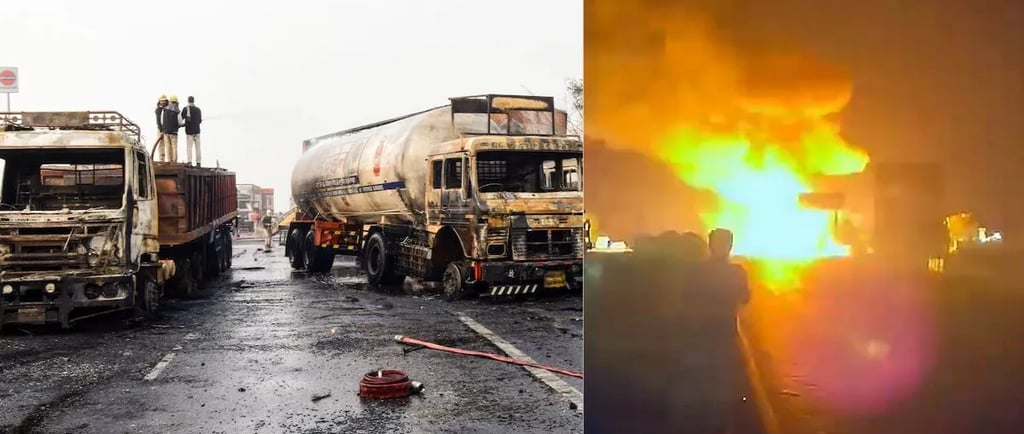
A major explosion recently shook the Jaipur-Ajmer Highway when a tanker carrying liquefied petroleum gas (LPG) collided with a truck, leading to loss of life and heavy damage. Such accidents highlight the high risks involved when flammable substances are transported improperly. While LPG and similar gases are essential for many industries and households, their safe carriage demands strict adherence to laws and safety practices. Here’s what the regulations say — and what drivers, owners and authorities must do to reduce such disasters.
Risks in Transporting LPG & Other Flammable Goods
LPG cylinders are under high pressure; any leak, puncture or exposure to heat can lead to fire or explosion.
Poorly secured loads can shift, causing cylinder damage or valve failure.
Mixing incompatible goods (flammable + corrosive, or toxic gases) increases danger.
Inadequate emergency preparedness prolongs response time, worsening outcomes.
What Drivers & Transporters Should Do
Proper Securing & Handling
Cylinders must be blocked, braced and prevented from movement inside vehicles. They should never be allowed to roll, bang against each other or against vehicle surfaces. Indian Kanoon+2Scribd+2Upright Position & Safe Storage
LPG cylinders must be transported upright. Horizontal or unstable loading increases risk. Indian Kanoon+2Scribd+2Valve Protection
Valves are critical — they must be protected by caps, grills or covers, to prevent accidental damage. Indian Kanoon+1Fire Safety Measures
Vehicles carrying LPG must have appropriate fire extinguishers (dry powder / CO₂ types), no smoking or open flames near the load, and warning notices. Scribd+2Indian Kanoon+2Driver Training & Documentation
Drivers should know how to read emergency information (TREM cards), understand the nature of hazard, what to do in transit or collisions, and know stipulated route and rest breaks. MYEV Portal India+2Legitquest+2Vehicle Maintenance & Route Safety
Ensure vehicle is in good condition; technical checks should be regular. Also selecting safer routes, timing (avoiding night travel in dangerous conditions) can make a big difference. mint+1
Government Rules & Policy
India has several layers of laws, regulations and guidelines governing the transport of flammable and hazardous goods:
Gas Cylinder Rules, 2016 (and earlier versions) — These set down how cylinders must be handled, stored, loaded, transported, including securing them, not transporting leaky or damaged cylinders, separating incompatible goods, and ensuring valve protection. Indian Kanoon+2Legitquest+2
Petroleum & Natural Gas Regulatory Board (PNGRB) — Has issued guidelines for transporting petroleum products by road that include prohibiting transport at night, mandating quarterly safety checks, journey planning, rest periods, etc. mint
Bureau of Indian Standards (BIS) – IS 18149:2023 — The recently published guidelines for “Transportation of Dangerous Goods” by BIS cover classification, packaging, labelling, handling, documentation, training, emergency response, and segregation of dangerous substances. India Today+2Manorama Yearbook+2
Central Motor Vehicles Rules, 1989 — These include special rules for goods carriages transporting hazardous material: responsibility of the driver, requirement to carry emergency-information, marking of vehicle, route planning, etc. Legitquest+2Transport Info+2
Mandatory Tracking for Hazardous Goods Vehicles — From September 2022 (for new models) and from early 2023 (existing models), vehicles carrying dangerous/hazardous substances must be fitted with location tracking devices as per automotive industry standard AIS-140. Indian Chemical Regulation Helpdesk
Gaps and What Needs Stronger Enforcement
Despite these rules, gaps remain: enforcement is weak in many regions; drivers or transporters cutting corners (in loading, securing, valve protection); night transport prohibition often ignored; leakage detection and emergency readiness are insufficient in many cases.
Conclusion
The Jaipur-Ajmer tragedy is a grim reminder that the transport of LPG and other flammable materials is not simply a commercial operation — lives are at stake. Drivers must follow safety protocols: proper loading, valve protection, use of fire-safety equipment, emergency information, and avoid overloading or mixing dangerous goods. On the policy side, frequent audits, stricter enforcement, route regulation, and ensuring all vehicles have tracking and safety certification are essential. If all stakeholders — government, transporters, drivers — do their part, such explosions can become much rarer.