Commercial Vehicle Operators Face Rising Costs as Karnataka Toll Rates Increase in 2025
For truck drivers and logistics companies, the issue extends beyond mere numbers. Rising tolls, when coupled with increasing diesel prices and maintenance costs, erode profit margins and make it harder for small fleet operators to survive. “We are already paying high fuel and service costs. Every toll hike reduces our earnings further,” said one Bengaluru-based trucker.
10/2/20252 min read

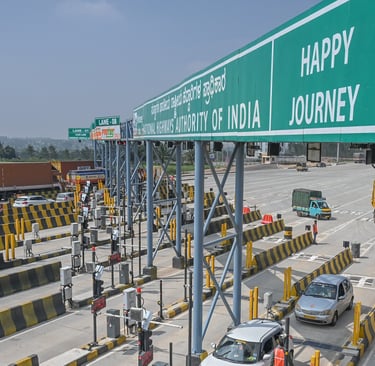
BENGALURU: Commercial vehicle operators in Karnataka are grappling with higher operating costs as toll charges across national highways and specific routes saw multiple hikes in 2025. The increases, implemented by the National Highways Authority of India (NHAI) and local toll operators, have triggered concern within the transport sector, which already struggles with rising fuel prices, driver shortages, and operational expenses.
The first round of hikes came into effect on April 1, 2025, when NHAI carried out its annual revision of toll rates across the country. Nationwide, tolls rose by 4–5%, in line with inflation and the Wholesale Price Index (WPI). This standard adjustment is part of NHAI’s policy to ensure financial sustainability of highway projects and to fund both maintenance and future expansion. For commercial vehicles, especially trucks and buses, the April revision translated into additional charges of around ₹20–25 per trip on several routes. For instance, around Lucknow and on the Delhi–Meerut Expressway, heavy vehicles saw a clear upward revision, according to reports.
The pressure on commercial operators deepened just three months later. On July 1, 2025, the Bengaluru–Nelamangala section of National Highway 4 (NH4) introduced a separate toll hike targeting light commercial vehicles, minibuses, buses, and trucks. As per the revised structure, LCVs and minibuses were charged ₹50 for a single journey, while buses and trucks were charged ₹100 for one-way trips. The Bengaluru–Nelamangala stretch is a critical route for transporting goods to and from the industrial hubs surrounding the city, making the hike particularly impactful for logistics operators.
Further examples of increased rates can be seen at the Sadahalli toll plaza near Bengaluru. Here, light commercial vehicles (LCVs) and minibuses were required to pay ₹185 for a single journey, while buses and trucks faced a charge of ₹370, as reported by the Times of India. These figures highlight the growing cost burden on commercial vehicles that traverse Karnataka’s highways daily.
While authorities argue that the toll revisions are essential for ensuring the upkeep of road infrastructure and improving travel efficiency, transporters remain concerned. According to industry representatives, frequent hikes—whether nationwide or route-specific—are adding to already high logistics costs. Many fear that these expenses will eventually be passed on to consumers, leading to higher prices for essential goods and commodities.
NHAI, however, has defended the hikes. Officials note that toll adjustments are mandated under the concession agreements and are directly tied to inflation indicators like the WPI. They argue that consistent funding is required for timely highway repairs, safety improvements, and new projects, particularly in a state like Karnataka where commercial traffic is steadily growing.
For truck drivers and logistics companies, the issue extends beyond mere numbers. Rising tolls, when coupled with increasing diesel prices and maintenance costs, erode profit margins and make it harder for small fleet operators to survive. “We are already paying high fuel and service costs. Every toll hike reduces our earnings further,” said one Bengaluru-based trucker.
As Karnataka continues to expand its highway network and industrial connectivity, the balance between infrastructure development and affordability for transport operators remains a pressing concern. Without relief measures or policy support, experts warn that the steady escalation of toll charges could ripple across supply chains, eventually affecting both businesses and end consumers.