Commercial Vehicle Sector Gains Traction: Sales Rise, EV Shift Accelerates, and GST Cut Sparks Optimism
With strong sales momentum, government incentives, and accelerating EV adoption, India’s commercial vehicle industry is entering a transformative phase. Analysts expect the remainder of 2025 to bring sustained growth, with electrification, digital fleet management, and rural logistics shaping the next era of commercial mobility.
10/16/20252 min read

New Delhi, October 2025:
India’s commercial vehicle (CV) industry is witnessing a phase of renewed momentum, driven by improving sales, policy reforms, and a rapid transition toward electric mobility. The latest industry data indicates that commercial vehicles are once again becoming the backbone of the country’s post-pandemic logistics revival, supported by government incentives and infrastructure expansion.
Strong Sales Growth in 2025
According to data released by the Federation of Automobile Dealers Associations (FADA), India’s overall automotive industry recorded a 6.1% growth in the second quarter of 2025, while the commercial vehicle segment outpaced it with an 8.3% increase.
Retail CV sales in September 2025 rose 2.66% year-on-year, led by Tata Motors and Mahindra & Mahindra, which continue to dominate the market. However, analysts noted a mixed performance across categories: light commercial vehicles (LCVs) performed strongly, while the medium and heavy commercial vehicle (MHCV) segment experienced slower growth due to delayed fleet replacement.
Despite the uneven segment performance, market sentiment remains positive, with the festive quarter expected to deliver further gains.
EV Transformation Accelerates
A major trend reshaping the CV landscape is the rapid electrification of fleets, particularly in the three-wheeler and last-mile cargo categories.
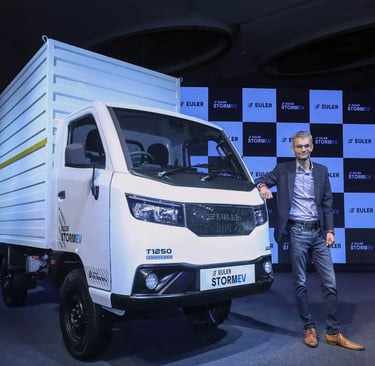
Manufacturers are responding to strong demand for low-running-cost, eco-friendly transport solutions. Recent electric launches, such as the Euler Storm EV and Jupiter Electric Mobility Tez, have drawn significant attention in urban markets focused on sustainability and total cost efficiency.
Infrastructure development for electric vehicles is also progressing rapidly. VE Commercial Vehicles (VECV) recently signed an MoU with Jio-bp Pulse to expand the EV charging network nationwide — a move expected to improve operational confidence among fleet operators and logistics firms.
Policy Boosts and Market Drivers
The government’s decision to reduce the GST rate on commercial vehicles from 28% to 18% has emerged as a key catalyst for the sector. Industry analysts predict that the tax cut will stimulate replacement demand among fleet owners who delayed purchases due to high acquisition costs.
In addition, infrastructure expansion projects, including national highway development and industrial corridor initiatives, are fueling demand for MHCVs, while rural economic resilience — buoyed by good monsoon forecasts and improved agricultural earnings — is supporting demand for smaller transport vehicles and pickups.
Top-Trending Models and Companies
Among the most searched models in India, the Tata Ace Pro, launched in June 2025, has quickly become a standout in the small commercial segment due to its affordability and reliability.
The Mahindra Bolero Pickup continues to dominate the light truck category, praised for its robust payload performance, while Ashok Leyland’s Dost+ remains popular as a cost-effective LCV with versatile applications.
In the electric 3-wheeler space, models like the Mahindra Treo and Piaggio Ape E City have gained traction as fleet operators pivot to sustainable, low-maintenance vehicles.
Corporate Realignments Reshape the Industry
The CV industry has also seen major structural changes in 2025. In April, Mahindra & Mahindra completed the acquisition of a controlling stake in SML Isuzu, rebranding it as SML Mahindra Ltd, signaling its intent to strengthen its position in the medium-duty vehicle market.
Meanwhile, Tata Motors’ demerger of its passenger and commercial vehicle divisions, effective October 14, 2025, has been one of the most talked-about developments in the Indian auto sector. Market experts believe the move will allow Tata Motors to sharpen focus and improve agility in each segment.
Outlook
With strong sales momentum, government incentives, and accelerating EV adoption, India’s commercial vehicle industry is entering a transformative phase. Analysts expect the remainder of 2025 to bring sustained growth, with electrification, digital fleet management, and rural logistics shaping the next era of commercial mobility.