India’s 10-ton payload truck : Price? Model? Features? Milage?
The medium-duty (around 10-tonne) segment looks poised for continued demand as e-commerce, construction and regional logistics grow. Manufacturers are sharpening their lineups with fuel-efficient engines, stronger drivelines and dealer finance packages to capture fleet owners who need dependable payload capacity without the operating complexity of heavy-duty trucks. For buyers, the deciding factors will be service reach, uptime guarantees and the finance package — not just the sticker price.
10/25/20253 min read
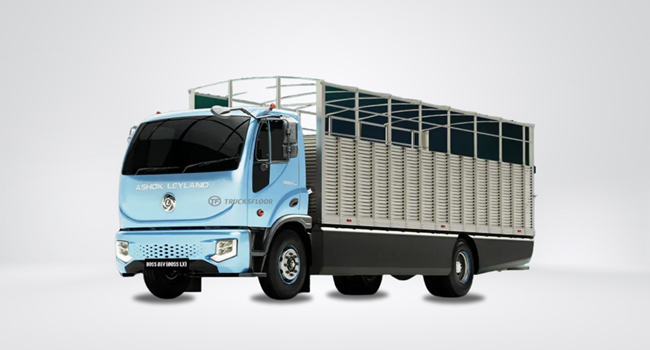
Mumbai — As economic activity and last-mile freight needs diversify, Indian fleet owners are increasingly turning to medium-duty trucks with roughly 10-tonne payload capacity — a sweet spot for regional distribution, construction and light industrial work. Over the last couple of years the market has broadened: legacy players such as Tata, Eicher, Ashok Leyland and BharatBenz now offer models that either deliver or are configurable close to the 10-ton payload mark, and competitive pricing plus improving finance options are making acquisition easier for small and mid-sized operators.
Models and pricing: more product breadth
Tata’s Ultra family — one of the marque’s workhorse lineups — includes variants with payloads reported up to around 10.2 tonnes, positioning it squarely in this segment for users who need urban and intercity capability with a reputed service network. Tata Motors Trucks
Eicher’s Pro series also targets the medium-duty market: higher-GVW Pro models (for example Pro 2114XP/related variants) list gross vehicle weights and payloads that bring them into the 10-tonne class; used market listings and commercial vehicle portals show ex-showroom prices for some Pro variants in the roughly ₹10–30 lakh band depending on variant and wheelbase. TruckDekho+1
BharatBenz and Ashok Leyland offer 6-wheeler and 4-wheel configurations that appeal to buyers seeking sturdier driveline and higher GVW options; BharatBenz’s 1015R and similar models are routinely listed in the ₹16–25 lakh range for cargo variants and have GVWs that place them near the medium-duty (10-tonne) segment depending on body fitment. TrucksBuses.com+1
Prices vary widely by manufacturer, wheelbase, body type (tipper, box, curtain-side) and state taxes — smaller 10-tonne cab-chassis models typically start in the low-to-mid single-digit lakhs for ex-factory commercial variants and move up to ₹20 lakh and beyond for heavy-duty configured trucks with stronger axles and higher-spec engines.
Features and drivelines: practical and durable
Manufacturers are pitching these trucks as workhorses: common features include medium-hp diesel engines (100–180 hp range depending on model), manual multi-speed gearboxes, leaf-spring or parabolic suspension tuned for load-carrying, and heavy-duty axles with reinforced frame rails. Many models now comply with BS6 emissions norms and come with ABS, hydraulic braking and optional driver comfort upgrades (air-suspended seats, tilt steering). Eicher and Tata highlight fuel-efficient engine mapping and low-maintenance components; BharatBenz emphasizes heavy-duty axles and long service intervals suitable for highway hauling and construction loads. TruckDekho+2Tata Motors South Africa+2
Mileage and durability: realistic expectations
Mileage for 10-tonne trucks depends far more on duty cycle (stop-start urban runs vs. steady highway hauling), load factor and driver behaviour than on listed economy figures. Fleet reports and manufacturer guidance suggest real-world fuel efficiency for medium-duty diesels typically ranges from 3.5–6.5 kmpl depending on conditions and whether the truck is fully loaded, fitted with tipper/box bodies or running empty. Durability remains a core selling point — chassis built for higher GVW, easily serviceable driveline components and dealer service reach are the primary determinants of lifecycle cost rather than headline mileage alone. (Manufacturers publish model-level specs; buyers should request body-specific fuel and stress tests from dealers.) TrucksBuses.com+1
Finance and interest rates: improving affordability
Financing continues to be the single largest enabler for commercial purchases. Major public and private lenders offer commercial vehicle loans with widely varying rates — recent market surveys list offers starting from the high-single digits (for well-profiled borrowers) to mid-teens for riskier profiles and used vehicles. For example, state-owned banks and large private lenders advertise transport vehicle loans “from around 7.5% p.a. onward” for well-qualified buyers, while other sources show bank and NBFC ranges roughly between 8%–16% depending on tenure, credit score, down payment and whether the vehicle is new or used. BankBazaar+1
Loan processing charges, prepayment terms and documentation (KYC, income/ITR proof, business vintage, vehicle invoices) vary by lender; many OEMs also have captive finance arms or tie-ups that bundle extended warranties and structured EMIs. Fleet buyers are advised to compare dealer offers, bank loans and NBFC packages — plus check for seasonal or festival-period discounts which can reduce effective cost.
What fleet owners should look for
Match payload to application — over-spec’ing raises purchase and running costs; under-spec’ing damages uptime.
Total cost of ownership (TCO) — factor fuel, maintenance, service network and resale into buying decisions.
Finance terms — negotiate down payment and check for repo-linked or fixed-rate options; good CIBIL and business vintage unlock cheaper rates. BankBazaar+1
Outlook
The medium-duty (around 10-tonne) segment looks poised for continued demand as e-commerce, construction and regional logistics grow. Manufacturers are sharpening their lineups with fuel-efficient engines, stronger drivelines and dealer finance packages to capture fleet owners who need dependable payload capacity without the operating complexity of heavy-duty trucks. For buyers, the deciding factors will be service reach, uptime guarantees and the finance package — not just the sticker price.