India’s 20-ton trucks : Now Buyers get more options!
With infrastructure spending and construction activity expected to sustain demand, OEMs will continue to sharpen financing deals, telematics and body-integration services. For buyers, the era of “lowest sticker price” is giving way to “lowest cost per tonne-km” thinking — a shift that rewards careful spec’ing, disciplined maintenance and smarter finance choices.
10/25/20253 min read
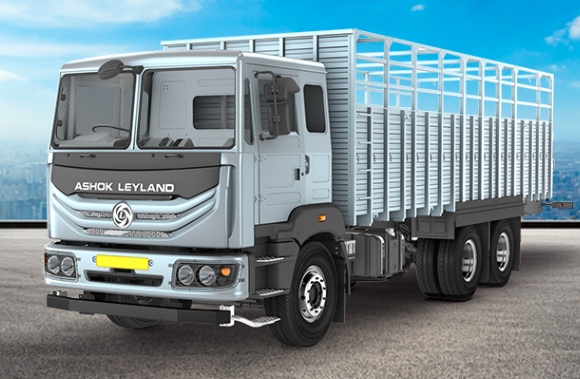
India’s medium-heavy commercial vehicle (CV) segment — trucks built to haul about 20 tonnes of payload — is seeing steady demand from infrastructure, mining, urban aggregates and long-haul logistics projects. As road projects and construction activity pick up across states, fleet owners are balancing upfront price, fuel economy, driveline robustness and credit costs when choosing between Tata, Ashok Leyland, BharatBenz, Eicher and Mahindra offerings. Here’s a snapshot of what the market looks like in late-2025 and what buyers should watch for.
Price band and where the models sit
Twenty-tonne payload models are typically offered as 18–22 tonne payload variants or within the 15–25 tonne GVW brackets, and on-road prices vary widely by make, body type (tipper, haulage, tractor), wheelbase and spec. Aggregated listings show 15–20 tonne class trucks priced broadly between about ₹15 lakh and ₹36 lakh ex-showroom, while 20–40 tonne class models stretch higher depending on engine and build. Buyers should expect mainstream 20-tonne tippers and rigid haulage trucks in the ₹20–45 lakh on-road range depending on region and body fitment. Trucksfloor+1
Who’s competing — and what they offer
Tata Motors remains the volume leader in many sub-segments with its Signa and LPT ranges available in 18–25-tonne payload variants; their strength is wide dealer network, multiple engine options and body integration partners. Ashok Leyland’s 19–20-tonne variants (Ecomet/1920 series and larger models) position themselves on durability and uptime, often pitched to municipal and mining buyers. BharatBenz (Mercedes-licensed drivetrains) and Eicher (focused on efficiency and lower operating cost) offer alternatives in similar GVW bands, while Mahindra’s Furio and other medium-duty models target cost-conscious fleet owners. Price lists and model pages from mainstream truck portals and OEM sites show a crowded field with overlapping price points — meaning spec and service network increasingly drive purchase decisions. Tata Motors Trucks+1
Driveline, engines and features that matter
For 20-tonne payload duties, buyers typically look for 6-cylinder diesel engines in the 170–260 hp band (depending on gradeability and body weight). Key drivetrain choices include:
robust torque curves (for frequent hill climbs and heavy loads), often achieved with 6-cyl Cummins or in-house engines;
Heavy-duty synchromesh or automated manual gearboxes (AMT) for better driver comfort and fuel consistency;
multi-leaf/air suspension options for tipper versus long-haul body use; and
long fuel tanks, strong axles and tyre specs (10- or 12-tyre configurations) for durability.
Safety and telematics are now standard options — ABS, air-brake packages, rear-view cameras and OEM telematics systems for preventive maintenance and route optimisation. These add to the initial cost but lower lifecycle downtime.
Fuel economy and operating cost
Fuel remains the largest running cost. Published mileage figures for medium-heavy Tata and other models cluster in the low single digits under heavy duty — commonly 3–6 kmpl depending on duty cycle, terrain and loading. On mixed duties some modern Signa/AMT models claim 4–5 kmpl; tipper duty and stop-start urban work can push mileage lower. Fleet owners should model fuel burn conservatively and monitor real-world telematics data rather than rely solely on brochure claims. TruckDekho+1
Finance options and interest rates
Nearly all major banks and NBFCs finance new CVs; large lenders such as SBI, HDFC and leading commercial finance houses offer new-vehicle, used-vehicle, balance transfer and body-construction financing. Typical features:
margins (buyer contribution) commonly 10–20% on on-road price;
tenors up to 7 years (84 months) for new vehicles with limited moratorium options;
financing of chassis and sometimes body construction (case-by-case).
Interest rates are borrower- and profile-dependent but, in market snapshots, commercial vehicle loan rates typically range from roughly 7.5% p.a. on the very best profiles to mid-teens for riskier borrowers — with many mainstream offers in the ~8–14% band depending on lender, tenure and credit history. OEM captive financiers (Tata Capital, Ashok Leyland Finance, etc.) often run festival offers with lower EMIs or longer tenors; dealers also bundle discounts and cashbacks. Buyers should compare total cost (rate + processing fees + insurance + prepayment terms) not just headline rate. State Bank of India+1
Durability, resale and total lifecycle view
Durability hinges on build quality, duty cycle and maintenance discipline. OEMs with strong spare-parts networks (Tata, Ashok Leyland, BharatBenz) typically offer higher uptime and better resale in secondary markets, which matters for owner-operators who rotate stocks every 4–7 years. Proper axle and gearbox matching to the intended load, adherence to service schedules, and use of OEM lubricants dramatically extend useful life and protect resale value.
What fleet owners should do now
Match spec to duty: don’t over-engineer an urban tipper or under-spec a heavy highway hauler.
Model fuel burn and cashflow: use conservative mileage and include downtime estimates.
Shop finance offers: compare banks, NBFCs and OEM captives for margins, tenor and processing charges.
Factor resale and service: network reach and depot support often trump a small initial price delta.
Outlook
With infrastructure spending and construction activity expected to sustain demand, OEMs will continue to sharpen financing deals, telematics and body-integration services. For buyers, the era of “lowest sticker price” is giving way to “lowest cost per tonne-km” thinking — a shift that rewards careful spec’ing, disciplined maintenance and smarter finance choices.