India’s 25-ton payload Trucks — buyers weigh price, driveline, finance and lifetime economy
The 25-tonne segment is mature but pragmatic: buyers prioritise torque and durability, not headline speed; OEMs respond with beefed-up drivelines and service offers; and financiers are ready with tailored credit — but interest costs and fuel remain the two biggest levers that determine whether a 25-tonne truck becomes a profit-maker or a cash drain. For most Indian operators, careful specification and tight finance modelling remain the winning strategies.
10/25/20253 min read
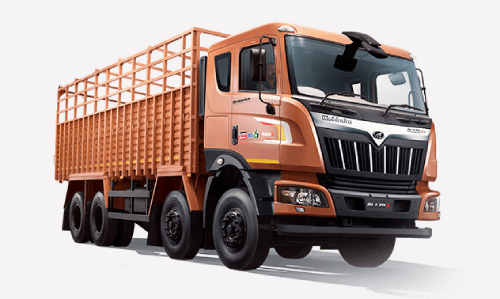
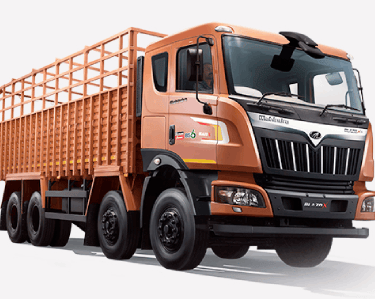
India’s market for heavy commercial trucks in the 25-tonne class — the workhorses used for construction, mining, aggregates and long-haul cargo — has tightened into a focused contest among established OEMs, with Tata, BharatBenz, Ashok Leyland, Eicher and select niche players offering purpose-built 25t-class rigid and tipper variants. Fleet buyers say the buying decision is increasingly shaped not just by headline price but by driveline choices, warranty/after-sales strength and the availability of competitive finance. bharatbenz.com+2bharatbenz.com+2
Models and driveline: proven heavy-duty bones
Manufacturers offer 25-tonne (and nearby GVW 25–30t) chassis in multi-axle 6×2 and 6×4 formats for tipper, dumper and cargo roles. BharatBenz’s 2523C and related 25-tonne tippers are packaged around a large-capacity 6-cylinder engine (≈235 hp / 175 kW, high torque band) and heavy-duty mechanical gearboxes and axles designed for off-road construction duty — specifications that underline the focus on torque and robustness rather than outright speed. Tata and Ashok Leyland similarly equip their 25t-class rigs with high-torque diesel engines, multi-speed manual transmissions and reinforced suspension (bogie/leaf or semi-elliptic depending on model and application). These driveline choices prioritise haulage under load, low-end pulling power and serviceability in tough conditions. bharatbenz.com+2Tata Motors Trucks+2
Price bands and on-road cost
On-road prices for new 25t-class trucks vary widely by brand, configuration (tipper vs cargo), wheelbase and fitted body, but buyers can expect ex-showroom starting points in the high ₹20-lakh to ₹40-lakh range for mainstream 25–28-tonne GVW rigs, with fully specified 6×4 tippers and mine-spec trucks moving into the ₹40–50+-lakh bracket. Market listing sites and OEM price pages show headline ranges — for example Ashok Leyland’s 28t 6×4 tipper family is listed around the ₹40–43 lakh band for many tipper variants — reinforcing that specialised bodies and accessories (Hyva/Hyva-style hydraulics, heavier axles, larger fuel/AdBlue tanks) add substantially to on-road cost. Fleet operators therefore model total cost of ownership (TCO) rather than only purchase price. Tractor Junction Trucks+1
Fuel economy and utilisation: low kmpl, high usage
Fuel consumption remains the dominant operating expense for 25-tonne machines. Real-world tipper and rigid 25t trucks typically deliver low single-digit fuel economy — commonly in the 3–5 kmpl band under mixed construction use — with long-haul, well-maintained tractors sometimes achieving higher figures. Industry analyses and brochure estimates stress that actual kmpl depends heavily on payload, road grade, driver behaviour and duty cycle; in turn, operators try to squeeze economy by keeping gear ratios, tyre pressures and specified maintenance schedules optimised. The industry is also watching shifts to alternative fuels (LNG) and electrification for certain duty profiles, but diesel remains dominant for heavy duty. TrucksBuses.com+2TruckDekho+2
Durability and after-sales: chassis life vs body life
Durability in the 25t class is two-part: the OEM chassis/axles/engine package and the fitted body (tipper bin, dumper, tipper hydraulics). OEMs reinforce frames, provide bogie suspensions for heavy tippers and design for high fatigue life; reputable aftermarket bodybuilders and correct specification of materials (HARDOX/AR plate options, thicker floor and side sections) determine how long a tipper body lasts before heavy repairs. For fleet owners, choices such as guaranteed parts availability, national service networks and extended driveline warranties often matter more financially than small differences in initial purchase price. OEMs and large dealers increasingly offer tailored maintenance contracts and uptime guarantees for construction fleets. bharatbenz.com+1
Finance landscape and interest rates: hire purchase still king
Most buyers fund new 25-tonne trucks through commercial vehicle loans from banks, NBFCs and OEM captive financiers. Large banks (SBI, HDFC) and NBFCs (Shriram, Tata Capital, etc.) advertise commercial vehicle products that can finance up to 80–100% of on-road price, with tenures up to 6–7 years (and moratorium options in some programmes). Published lending ranges show headline lending rates starting in the high single digits for well-profiled borrowers (≈8–9% p.a. marketed floor) and spanning into the mid-teens depending on credit, lender and whether the borrower is an existing corporate or small operator — HDFC’s public fee schedules and SBI product pages show average APRs in the broadly 8–17% window for different customer segments. This means EMI structuring and down-payment strategy are critical to keep cashflow healthy for heavy-duty buyers. OEM captives (Tata Capital, Ashok Leyland finance partners) frequently run festival and fleet offers to reduce initial margin or processing fees. HDFC Bank+2State Bank of India+2
What buyers should watch
For fleet owners buying 25t vehicles in 2025: specify the exact duty cycle (m³ hauled per trip, average trip length, gradient), get real user feedback on kmpl and uptime for the chosen model, compare warranty and dealer network depth, and balance initial price against TCO (fuel, tyres, parts, downtime). Also model finance under conservative interest assumptions — while some lenders advertise sub-9% pricing for prime customers, many small operators will realistically pay low-to-mid teens. Finally, consider emerging options such as LNG-capable long-haul tractors or electric tech pilots for specific routes — both will alter fuel cost calculus over the next few years. Reuters+1
Bottom line
The 25-tonne segment is mature but pragmatic: buyers prioritise torque and durability, not headline speed; OEMs respond with beefed-up drivelines and service offers; and financiers are ready with tailored credit — but interest costs and fuel remain the two biggest levers that determine whether a 25-tonne truck becomes a profit-maker or a cash drain. For most Indian operators, careful specification and tight finance modelling remain the winning strategies. bharatbenz.com+1