India’s 35-ton payload segment heats up: 48–49t GVW trucks from Tata, Ashok Leyland, Eicher, Volvo and more
With infrastructure and construction activity steady and mining demand cyclical but firm in pockets, the 48–49t GVW / 35-tonne payload bracket is likely to remain a core segment for OEMs. Competition will be fought on TCO, dealer reach, and increasingly on finance flexibility — even as buyers balance lower capital cost against the premium durability and fuel efficiencies that global brands promise.
10/25/20253 min read
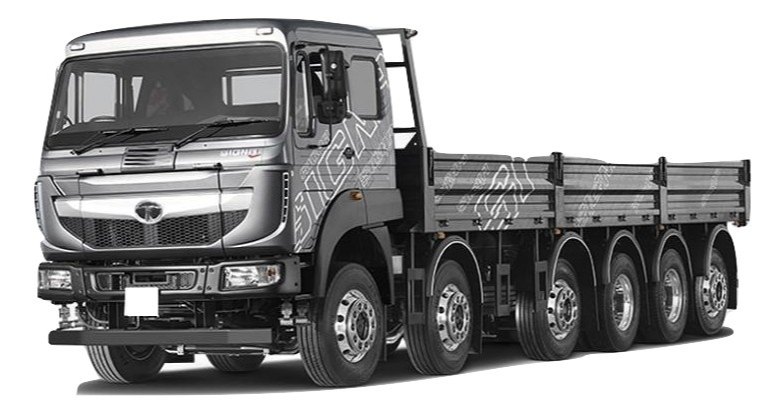
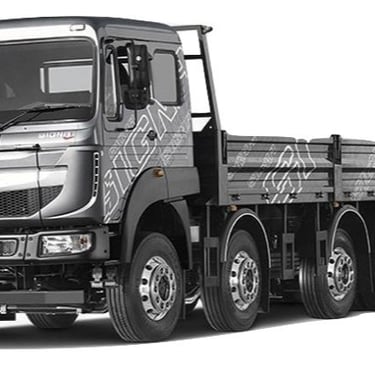
India’s market for heavy-duty haulage is sharpening its focus on 35-tonne payload (48–49 tonne GVW) rigid trucks and tippers — vehicles that sit at the sweet spot for bulk construction, mining and long-haul transport. Over the past year OEMs have leaned on multi-axle chassis, higher-torque drivetrains and finance tie-ups to win fleet buyers who demand payload efficiency, low operating cost and durability.
Market leaders and model ranges
Tata Motors’ LPT 4925 sits squarely in this band as a 49,000 kg GVW platform capable of handling around 35–38 tonnes of payload depending on body fitment and axle configuration. Tata lists the LPT 4925 in its heavy-haulage family with ex-showroom pricing in the mid-₹40-lakh range, making it one of the mainstream, value-oriented choices for fleet owners. TruckDekho
Ashok Leyland has pushed multiple 47–48t GVW variants such as the 4825 series (including 10x2 and 10x4 layouts). These multi-axle trucks are marketed to tipper and bulk-hauling operators and are priced from roughly ₹40 lakh upwards depending on drivetrain and body — positioning Ashok Leyland as a competitive alternative on total cost of ownership (TCO). Tractor Junction Trucks
Eicher’s Pro-series rigid trucks target the same 48t GVW segment with multi-axle configurations designed for tankers, bulkers and construction loads; public listings show 48,000 kg GVW Pro variants in a price band comparable to mainstream rivals. TruckDekho
At the premium end, global players such as Volvo sell 8x4 FMX tipper/rigid platforms engineered for severe duty. The Volvo FMX 8x4 variants (GVW figures and body layouts tuneable to 35t payloads) command significantly higher initial outlays — prices run into the ₹60–75 lakh bracket for fully specified 8x4 units — but promise higher engine horsepower, longer service intervals and stronger resale in capital-intensive segments. TruckDekho+1
Driveline, axle layouts and what buyers are choosing
For 35-tonne payload duty the common technical solutions are multi-axle rigid chassis (8x4 or 6x4 depending on application), high-displacement six-cylinder diesel engines producing 250–500 hp, heavy-duty transmissions (9–16 speed), and air-suspension options on steer and tag axles to improve ride and load distribution. OEM listings and spec sheets consistently show that fleet buyers prefer 8x4 tippers for off-road mining and 10-tyre (or more) rigid haulage on construction contracts because they spread axle loads and reduce road wear.
Fuel economy and operating numbers
Real-world mileage for heavy 48–49t GVW rigs varies widely with duty cycle. Manufacturer and dealer data for these heavy-duty trucks indicate typical fuel economy in a narrow band — roughly 3–4 km per litre under mixed highway and loaded construction work — although long-haul box body operations can sometimes eke higher figures. Buyers stressed that fuel consumption should be judged per-tonne-km rather than raw kmpl; higher payload utilisation often delivers better per-tonne economics. TruckDekho+1
Durability and TCO
Durability claims from OEMs focus on reinforced frames, heat-treated axles, modular drivetrains and long service intervals. Global players highlight higher OEM warranty and extended service plans as part of the value proposition; domestic manufacturers counter with lower purchase price, local spares availability and faster turnarounds at dealer networks. For many fleet owners the deciding metric is TCO over 5–7 years, measured as depreciation + fuel + tyres + periodic maintenance per-tonne-km.
Finance landscape and interest rates
Financing is central to buying behaviour in this price bracket. Major banks and NBFCs continue to offer commercial vehicle loans with interest rates that depend heavily on credit profile, loan type (new vs used), and tenor. Public sector lenders commonly advertise some of the most competitive headline rates (SBI’s transport loans have been reported in the low-single digits above benchmark offers, while private banks and NBFCs display wider spreads depending on risk). Typical advertised ranges from market aggregators show new CV loans available from the high-7% to mid-14% annual range depending on lender and borrower profile — with government bank offers often starting lower and private/NBFC rates higher. Processing fees, down payments (commonly 15–30%) and tenure (3–7 years) remain key negotiation levers. BankBazaar+1
What fleet buyers are telling OEMs
Operators buying into the 35-tonne payload segment want two things: reliable on-time delivery of vehicles and predictable financing with structured EMIs linked to cash flows. That has driven OEMs to bundle finance offers, offer pay-per-km servicing packages and increase dealer financing tie-ups — all designed to reduce upfront pain and smooth cashflow for SME fleet operators.
Outlook
With infrastructure and construction activity steady and mining demand cyclical but firm in pockets, the 48–49t GVW / 35-tonne payload bracket is likely to remain a core segment for OEMs. Competition will be fought on TCO, dealer reach, and increasingly on finance flexibility — even as buyers balance lower capital cost against the premium durability and fuel efficiencies that global brands promise.