India’s 42-ton payload Trailers —Price and Models, Engine and Milage
10/25/20253 min read
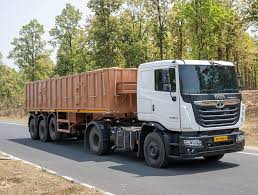
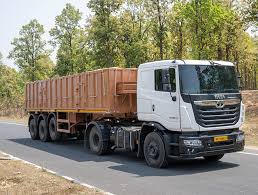
As infrastructure projects and long-haul freight demand climb, India’s market for high-capacity commercial vehicles — the 42-ton payload class (roughly 52–55 tonne GVW) — has become the focal point for fleet owners, OEMs and financiers. Tata, Ashok Leyland, BharatBenz (Mercedes-Benz), Volvo, Eicher and Mahindra now offer tractor-trailer and rigid-platform solutions — from heavy-duty 6x4s to 8x4 tippers and specialized flatbeds — pitching a mix of torque, fuel economy technology and post-sale support to win business.
Tata and Ashok Leyland: price-performers with workhorse credentials
Tata Motors’ Prima/Signa family remains one of the most visible in the 52–55 GVW band. Models like the Prima/Signa 5530 variants are marketed to owner-operators and big fleet customers for intercity and heavy-haul duties, combining high-output engines, multi-speed gearboxes and driver-comfort features (air seats, tilt/telescopic steering, AC) aimed at lowering driver fatigue on long runs. On price, tractor units of this class from Tata list in the ₹39–44 lakh (ex-showroom) band depending on spec and state levies. TruckDekho+1
Ashok Leyland’s 5525/5525 6x4 lineup is pitched similarly — durability, low life-cycle costs and proven drivetrains. Pricing for the Ashok Leyland 5525 6x4 is broadly comparable to its Tata peers and typically starts in the low-to-mid ₹40 lakh bracket (ex-showroom), again varying with axle layout and state registration. These trucks are widely used here as tractor units for 42-ton payload combinations and for fitted flatbeds or bulk trailers. TruckDekho+1
Premium and specialized options: Volvo and Bharath Benz
International brands occupy the premium end. Volvo’s FM/FM-X series and BharatBenz (Daimler India) heavy models are positioned for high-duty sectors (mining, cement, chartered heavy haul) where uptime, payload optimisation and advanced safety systems (ABS, stability assist, strong chassis engineering) justify higher acquisition costs. Volvo models in India typically start significantly higher — commercial listings show ex-showroom price brackets from around ₹70 lakh and can push well into the ₹90-plus lakh range for high-spec FM/FM-X units. BharatBenz competitive heavy models are similarly priced in the upper mid-segment. Tractor Junction+1
Homegrown value: Eicher and Mahindra
Eicher offers heavy-duty Pro and Pro 6000 series trucks that bridge the gap between outright premium and entry-grade budgets; prices for heavy Eicher rigs in this capacity band frequently start in the low ₹40 lakh zone but can vary widely with body and axle configuration. Mahindra’s recent moves into larger truck segments (strengthened by strategic acquisitions) mean it’s aiming to scale up offerings for the 42-ton market, though many fleet buyers still pair Mahindra-sourced 6x4s with specialized trailers when cost is a primary constraint. TruckDekho+1
Driveline, fuel economy and real-world mileage
Across brands, common technical choices define the category: high-displacement diesel engines with peak torques in the mid-to-high Newton-metre range, 9–16 speed manual or automated manual transmissions, reinforced multi-leaf or air suspension for axle load management, and heavy-duty axles (6x4, 8x4) depending on trailer configuration. Mileage for fully-loaded 42-ton operations remains modest: fleet experience and market data place long-haul diesel economy generally between 1.5–4.0 kmpl, heavily dependent on route profile, speed and load factor. Fuel-saving tech (ECU mapping, cruise control, low-rolling-resistance tyres) narrows differences but doesn’t change the fundamentals: heavier loads = lower kmpl. Trucksfloor+1
Durability and service networks — the hidden cost
Durability decisions are as much about chassis design and axle life as they are about dealer footprint and parts availability. Tata and Ashok Leyland score high with deep service networks and cost-efficient spares; Volvo and BharatBenz sell longevity, telematics-enabled uptime guarantees and longer service intervals at a premium. For many fleet owners, total cost of ownership (TCO) — including tyre life, scheduled maintenance and resale value — outweighs initial ticket price when choosing between brands.
Funding & interest: how fleets are financing growth
Commercial vehicle loans remain the backbone of fleet expansion. Major banks and NBFCs (SBI, HDFC Bank, Bank of Baroda, specialised financiers) offer CV loans and tailored fleet products; typical headline rates as of 2025 span a wide band (roughly 7.5% p.a. onwards for competitively rated borrowers with offers changing with tenure, collateral and RBI-linked benchmarks). Tenors commonly extend up to 7 years for new trucks; financiers increasingly offer body-and-chassis funding, flexible EMIs, top-ups and refinancing for used assets, making acquisition easier for owner-operators and mid-sized fleets alike. HDFC Bank+1
Buying advice for fleet owners (newsworthy takeaway)
For buyers targeting 42-ton payload work: define route mix (highway vs. stop-start), expected annual kilometres, and availability of dedicated workshop support. If uptime and a lower TCO are mission-critical — e.g., long-distance container or cement circuits — premium brands with strong telematics and service SLAs can pay off. For regional haulers focused on capital cost, Tata, Ashok Leyland and Eicher present strong value propositions. Finally, lock in finance offers early: interest-rate spreads and tenor materially change monthly cash flow and fleet economics.
As demand for heavy-duty freighters grows across India’s highways and industrial corridors, competition between cost leaders and premium players will intensify, and financing innovations will continue to shape who expands and who consolidates in the 42-ton payload space.