India’s Coal Import & Logistics Landscape: Ports, Policies, Challenges, and the Road to Self-Reliance
India’s coal import landscape reflects a transition phase—where international sourcing remains critical, especially for coking coal, while domestic production and logistics infrastructure are being rapidly strengthened.
EDUCATION
1/3/20263 min read
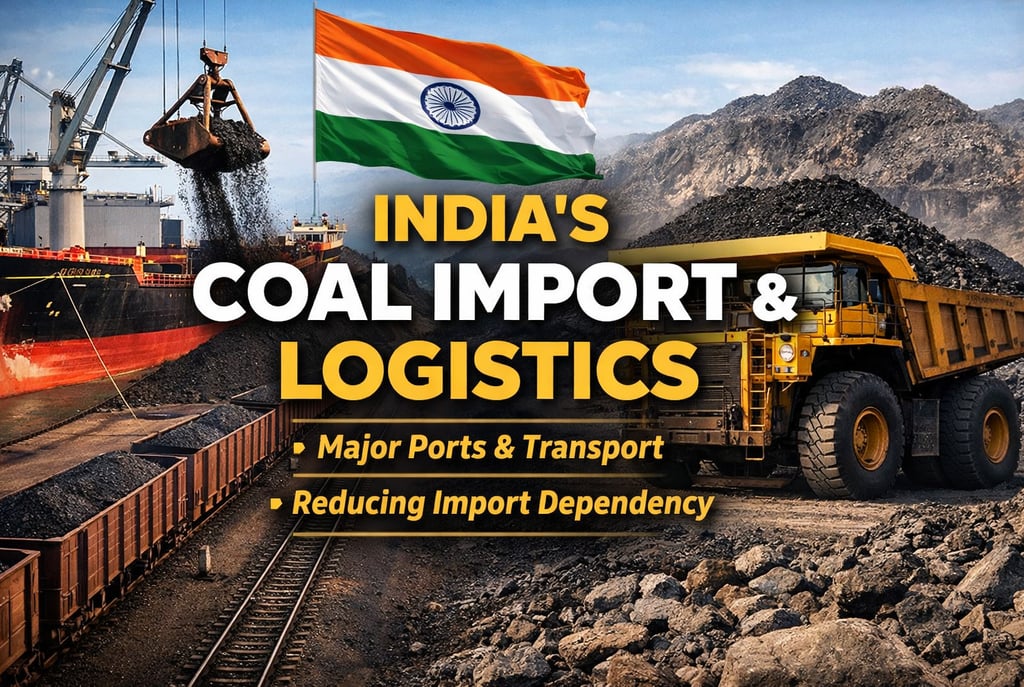
India remains one of the world’s largest consumers of coal, driven by its growing demand for electricity, steel, and cement. Despite having abundant coal reserves, India imports significant quantities of coal every year to bridge quality and supply gaps—especially for coking coal used in steel production and high-grade thermal coal required by coastal power plants.
At the same time, the Government of India is aggressively pushing to reduce coal import dependency through higher domestic production, infrastructure upgrades, and logistics reforms under the Coal Logistics Plan & Policy 2024. This article explores India’s coal import ecosystem, logistics chain, policy direction, and the challenges shaping the future.
Why India Imports Coal Despite Large Domestic Reserves
India’s coal imports are not due to scarcity alone, but largely due to quality mismatch and geographic constraints.
Key Drivers of Coal Imports in India
Coking Coal Shortage
India lacks sufficient reserves of prime coking coal needed for steelmaking. As a result, over 85% of coking coal demand is met through imports.High-Grade Thermal Coal Demand
Coastal power plants and cement units prefer imported coal due to:Higher calorific value
Lower ash content
Stable combustion efficiency
Logistics Cost Optimization
For coastal plants, importing coal via sea routes is often cheaper than transporting domestic coal over long inland distances.Demand-Supply Gaps
Seasonal spikes in power demand and delays in domestic mine output compel utilities to rely on imports.
Major Coal Importers in India
India’s coal imports are dominated by power, steel, and cement sectors, with procurement either done directly by consumers or through international traders.
Leading Importing Segments
Coastal Thermal Power Plants
Plants such as Tata Power Mundra and Adani Power rely heavily on imported coal.Steel Producers
Integrated steel plants import coking coal from Australia, Russia, and the US.Cement Manufacturers
Imported coal and petcoke are used to ensure consistent kiln operations.
Procurement Model
Imports are allowed under Open General License (OGL)
No quantitative restrictions; buyers manage sourcing and logistics independently
Global trading houses handle shipping, blending, and quality assurance
Coal Import Logistics in India: From Port to Plant
4
Coal import logistics in India involves a multi-modal transportation system, optimized for scale and cost.
Step-by-Step Coal Logistics Chain
1. International Shipping
Coal is shipped via Panamax and Capesize vessels from exporting countries such as:
Australia
Indonesia
South Africa
Russia
2. Port Handling & Discharge
Major ports handling coal imports include:
Mundra Port
Paradip Port
Dhamra Port
Krishnapatnam Port
Ports offer:
Mechanized unloading systems
Covered storage yards
Sampling and testing labs
3. Inland Evacuation
After discharge, coal is transported using:
Indian Railways rakes (primary mode)
Road transport for last-mile delivery
Coastal shipping & inland waterways (limited but growing)
Role of Logistics Service Providers
Specialized coal logistics companies provide end-to-end mine-to-plant solutions, including:
Vessel chartering & freight negotiation
Port handling & customs clearance
Rail rake coordination
Quality inspection & sampling
Blending, stockyard management & warehousing
These services help power and steel producers reduce operational risk and ensure consistent fuel supply.
Government Policy: Reducing Import Dependency
India’s coal strategy has shifted from import reliance to self-reliance and energy security.
Key Policy Initiatives
1. Commercial Coal Mining
Private players are encouraged to develop coal blocks through transparent auctions.
2. Coal Logistics Plan & Policy 2024
Focus areas include:
Dedicated rail corridors for coal evacuation
First-mile connectivity (FMC) projects
Mechanized handling at mines
Faster transport from pithead to plant
3. Ambitious Production Targets
Domestic coal production target: 1.5 billion tonnes by FY 2030
Reduced reliance on imported thermal coal for power generation
4. Import Rationalization
The Ministry of Coal discourages non-essential imports, especially where domestic coal is adequate.
Challenges in India’s Coal Import & Logistics System
Despite reforms, several challenges remain:
1. Coking Coal Dependency
India has limited options to replace imported coking coal, making steel production vulnerable to global price volatility.
2. Infrastructure Bottlenecks
Rail congestion in coal belts
Port evacuation delays during peak seasons
Limited inland waterway usage
3. Price & Supply Volatility
Geopolitical tensions and global demand swings affect coal availability and freight rates.
4. Environmental Pressure
Balancing energy security with climate commitments remains a long-term challenge.
Emerging Trends in India’s Coal Ecosystem
Gradual decline in thermal coal imports
Higher domestic production efficiency
Increased use of coal beneficiation & washing
Digital monitoring of coal movement
Expansion of coastal shipping for bulk cargo
Conclusion: A Transition in Progress
India’s coal import landscape reflects a transition phase—where international sourcing remains critical, especially for coking coal, while domestic production and logistics infrastructure are being rapidly strengthened.
With the Coal Logistics Plan 2024, commercial mining reforms, and massive rail-port investments, India is steadily moving toward reduced import dependency, enhanced fuel security, and cost-efficient coal transportation.
In essence, coal imports will remain strategically important, but their role will evolve as India balances quality needs, infrastructure growth, and self-reliance goals in the coming decade.