Inland Transport in India Sees Dramatic Growth Amid Global Supply Chain Disruptions
While global conflicts have disrupted international trade, they have also created an unexpected opportunity within India. The inland transport sector is booming, driven by increased domestic movement of raw materials and goods.
4/20/20263 min read
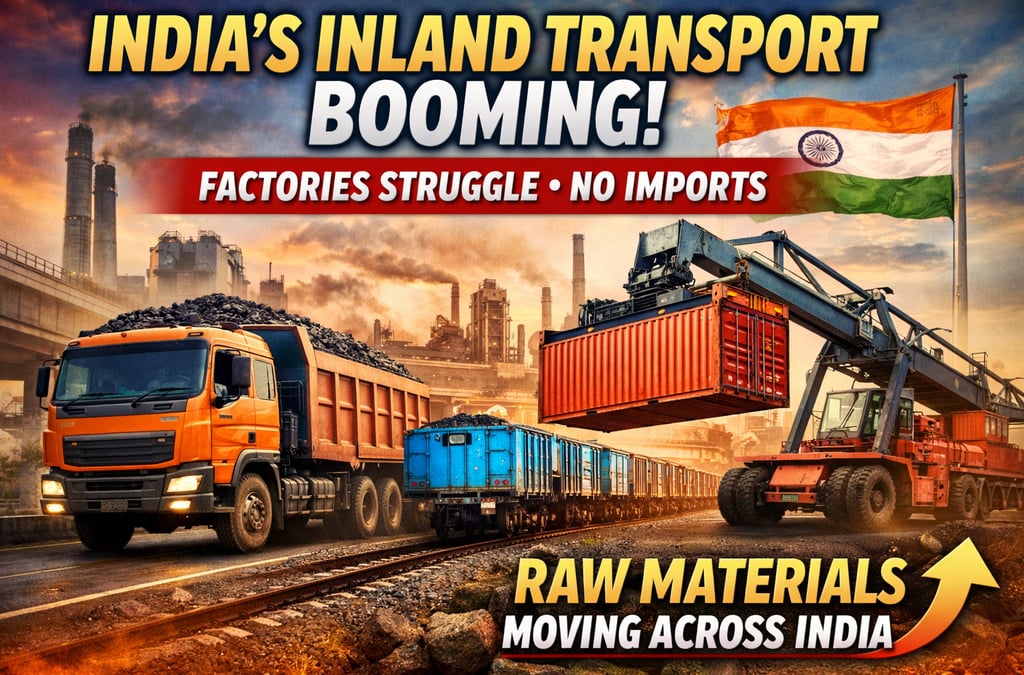
The global economy is currently facing unprecedented challenges due to geopolitical tensions and war-related disruptions. One of the most affected sectors worldwide is international trade, particularly the import of raw materials. However, while global supply chains struggle, an interesting shift is taking place within India. The inland transport sector in India is witnessing significant growth, driven by increased domestic movement of goods and raw materials.
Impact of War on Global Supply Chains
Ongoing conflicts across different parts of the world have disrupted international trade routes, increased freight costs, and delayed shipments. Countries that rely heavily on imports are facing shortages of essential raw materials such as metals, chemicals, fuel, and industrial components.
For India, this has created a ripple effect across industries. Many factories that depend on imported materials are now struggling to maintain production levels. Delays at ports, rising container costs, and unpredictable shipping schedules have made imports both expensive and unreliable.
Key challenges include:
Shortage of imported raw materials
Increased shipping and freight charges
Longer lead times for international cargo
Port congestion and delays
Currency fluctuations impacting import costs
These challenges have forced industries to rethink their sourcing strategies.
Shift Toward Domestic Supply Chains
With imports becoming uncertain, Indian industries are increasingly turning toward domestic sourcing of raw materials. This shift has created a strong demand for inland logistics and transportation services.
Instead of relying on international shipments, manufacturers are now sourcing materials from within India—whether from mines, agricultural regions, or local suppliers. This has led to a surge in demand for road transport, rail freight, and regional logistics networks.
Inland Transport Sector Growth in India
The Indian logistics and transport sector is experiencing a boom, especially in inland freight movement. Trucks, railways, and even coastal shipping are playing a crucial role in maintaining supply chains within the country.
Major growth drivers:
Increased domestic sourcing of raw materials
Expansion of manufacturing under “Make in India”
Rising demand for inter-state goods movement
Growth in infrastructure development projects
Government focus on logistics efficiency
Transporters, especially truck owners and fleet operators, are seeing higher demand for their services. Routes connecting industrial hubs, ports, and rural production areas are becoming more active than ever.
Role of Road Transport in Inland Logistics
Road transport remains the backbone of India’s logistics system. With flexibility and last-mile connectivity, trucks are the preferred mode for transporting goods across states.
Why road transport is booming:
Quick adaptability to changing routes
Door-to-door delivery capability
Increased demand from small and medium industries
Expansion of highway infrastructure
Tipper trucks, container trucks, and bulk carriers are heavily utilized for moving raw materials like sand, coal, cement, steel, and agricultural products.
For transport business owners, this is a period of opportunity. Higher demand means better freight rates and increased trip frequency.
Challenges Faced by Factories
While the transport sector is benefiting, factories are still facing serious challenges due to raw material shortages.
Common problems:
Interrupted production cycles
Increased input costs
Dependency on limited local suppliers
Reduced profit margins
Many factories are operating below capacity because they cannot secure enough raw materials. Some have even shifted to alternative materials or reduced production temporarily.
Government Initiatives Supporting Logistics Growth
The Indian government has taken several steps to strengthen the logistics sector and reduce dependency on imports.
Key initiatives:
PM Gati Shakti Plan for infrastructure integration
Development of Dedicated Freight Corridors (DFC)
Promotion of Make in India manufacturing
Investment in multi-modal logistics parks
Digitization of transport systems
These initiatives aim to make inland transport faster, more efficient, and cost-effective.
Opportunities for Transport Businesses
For transporters and logistics companies, the current situation presents a strong growth opportunity.
Opportunities include:
Increased demand for bulk transportation
Expansion into new routes and regions
Higher utilization of vehicles
Growth in contract logistics services
Collaboration with manufacturers and suppliers
Small fleet owners and independent truck operators can benefit by building strong relationships with local industries and ensuring reliable service.
Future Outlook of Inland Transport in India
The future of inland transport in India looks promising. Even after global conditions stabilize, the shift toward domestic supply chains is expected to continue.
Trends to watch:
Increased use of technology in logistics
Growth of digital freight platforms
Adoption of electric and fuel-efficient vehicles
Expansion of warehousing and storage facilities
Integration of multi-modal transport systems
India’s logistics sector is expected to grow rapidly, contributing significantly to the country’s GDP.
Conclusion
While global conflicts have disrupted international trade, they have also created an unexpected opportunity within India. The inland transport sector is booming, driven by increased domestic movement of raw materials and goods.
Factories may be struggling due to import shortages, but transport businesses are seeing strong demand and growth. This shift highlights the importance of building resilient domestic supply chains and investing in logistics infrastructure.
For transporters, fleet owners, and logistics companies, this is the right time to expand operations and strengthen their position in the market. As India moves toward self-reliance, inland transport will continue to play a crucial role in powering the nation’s economy.