Karnataka’s tech capital goes smart: AI eyes on the roads
If Bengaluru — a city known widely for its tech-savvy culture — gets this right, it could pave the way for dozens of other Indian cities to follow. The future of traffic policing may well lie not in more constables on the roads — but smarter cameras, data‑driven enforcement and stable, sustained improvements in road behaviour.
11/26/20255 min read
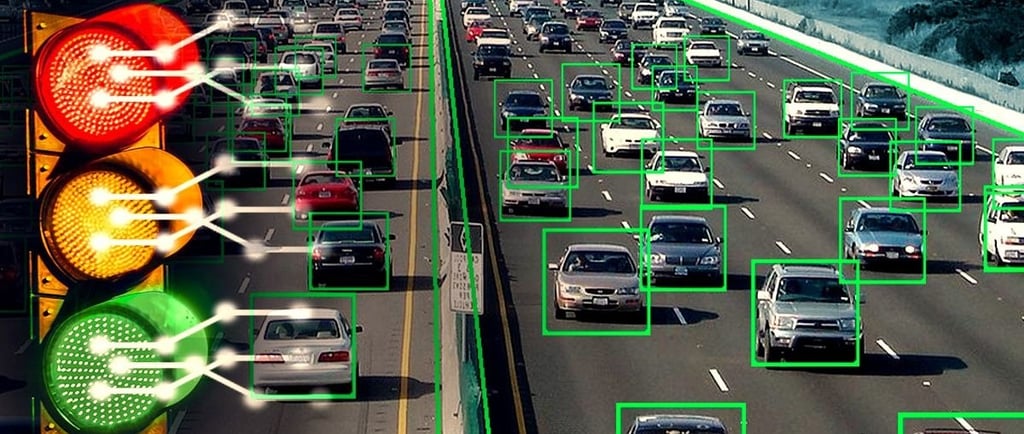
In 2025, Bengaluru’s traffic policing underwent a compelling transformation: AI-powered cameras are now doing most of the heavy lifting when it comes to detecting traffic violations. According to data from ASTraM (Actionable Intelligence for Sustainable Traffic Management), between January and July 2025 nearly 87% of all traffic violations were detected through contactless, automated methods — rather than traditional on‑ground policing. The Times of India+2The Hans India+2
This shift signals more than just a change of tools: it's a move towards a streamlined, transparent, and technology-driven model of enforcement. For a city perennially choked by traffic and congestion, the integration of AI adds a critical layer of oversight — potentially bringing discipline to chaotic roads.
Inside the system: How AI cameras and automation work
The backbone of this transformation is the city’s deployment of AI‑enabled cameras under the broader Intelligent Traffic Management System (ITeMS). Originally rolled out in 2022 with cameras at around 50 junctions, the system has now expanded to cover more areas, reflecting the city’s ambition to enforce traffic norms round‑the-clock. Moneycontrol+3The Indian Express+3The New Indian Express+3
These cameras are capable of identifying a variety of offences — such as riding or driving without a helmet, seat‑belt violations, red‑light running or signal jumping, stop-line violations, and more. The Indian Express+2mint+2 Once a violation is detected, the system captures video and photographic evidence; a challan is generated and sent to the vehicle owner, often via SMS. The Indian Express+2Hindustan Times+2
Beyond mere detection, the automation saves manpower and cuts out opportunities for on-ground harassment or corruption. Instead of hundreds of traffic policemen stationed at junctions, fewer officers — or even none — are needed to monitor compliance. Their time can instead be diverted toward managing congestion, emergencies, or other pressing traffic duties. Hindustan Times+2The Indian Express+2
The numbers speak: Violations, coverage, and what gets caught
Between January and July 2025, Bengaluru logged over 3 million traffic violations — roughly 11,800 per day, detected by AI cameras. Manual bookings by traffic personnel during this period accounted for only around 1,500 per day. Hindustan Times+2The Hans India+2
Of the offences captured by automation, the most common were:
Riding without a helmet — 36% Hindustan Times+1
Pillion riders without helmets — 19% Hindustan Times+1
Seat-belt violations — 16% Hindustan Times+1
Signal jumping / red‑light violations — 13% Hindustan Times+1
Meanwhile, manual enforcement — cases where police personnel physically stopped vehicles — mostly caught offences like no‑entry driving or illegal parking. These made up only a small portion of total detections, underscoring how AI has taken over routine surveillance. The Hans India+1
As of late 2025, the city reportedly has around 75 ITeMS cameras covering key junctions. Officials noted that camera coverage — along with growing public awareness — are key reasons behind the rise in automated bookings. The Hans India+2News Karnataka+2
Why use AI for traffic policing — and what changes
For decades, traffic enforcement in Indian cities relied heavily on on‑ground police presence: constables manually stopping vehicles, checking helmets, seat-belts, licences, etc. This approach had multiple limitations:
It required large manpower.
It was inconsistent — some areas saw frequent checks, others almost none.
It was prone to delays, human error, even misuse of power.
Many violations, particularly fleeting ones like signal jumping or helmet non-compliance on fast-moving two-wheelers, would go unrecorded.
AI and automation have addressed many of these drawbacks. With cameras monitoring 24×7, at multiple junctions simultaneously, almost all traffic movements are under surveillance. Infractions are recorded in real-time, with irrefutable photo/video evidence. The system reduces human intervention, potentially limiting subjectivity and prompting fairer enforcement.
Moreover — and perhaps most importantly — it changes the enforcement dynamic: instead of relying on police to catch violators, the system is always “on”. This can act as a strong deterrent: motorists know that even if no cop is physically present, cameras might still catch them.
As per remarks made by the city traffic leadership during recent forums, the shift toward AI-based traffic management — including congestion monitoring — is “irreversible”. Moneycontrol+1
Early signs of impact — but challenges remain
So far, the rollout appears to have borne fruit. The sheer volume of automated challans — 87% of total — suggests enforcement has scaled up rapidly. The shift has saved manpower and allowed police officers to focus on broader traffic management, rather than routine enforcement. Many citizens are now more aware of fines and traffic norms thanks to digital alerts via the ASTraM app. The Hans India+2Hindustan Times+2
However, the system is not without challenges. Several persistent traffic issues remain — especially illegal parking and wrong‑side driving or one‑way violations — which are harder to catch with fixed cameras, especially if they occur in narrow lanes, side-streets, or footpaths. Even the latest camera network does not cover all roads. The Hans India+2The New Indian Express+2
Moreover, some motorists and citizen‑reporters have flagged difficulties with the ASTraM app: in certain areas (especially on city outskirts) the app reportedly lacks features such as uploading photos from the gallery, and users sometimes get no updates about the status of their violator‑reports. Hindustan Times+1
Then there are broader questions: can cameras alone instil meaningful discipline? Will traffic culture — responsible driving, respect for rules, considerate behaviour — evolve under surveillance? Or will people find ways to game the system (for example, by using obscured or tinted license plates, or riding in unmonitored zones)?
Bigger vision: AI, congestion control and smarter city planning
The rise of AI surveillance in Bengaluru signals a larger ambition: not just policing violations, but smart urban mobility. As per recent statements by traffic authorities, the aim is to expand AI-based enforcement and integrate it with congestion‑monitoring, real-time traffic analysis, and adaptive traffic management — possibly turning Bengaluru into one of India’s first fully “smart” traffic-managed cities. Moneycontrol+1
In longer term, AI could help detect more sophisticated or granular offences — such as overloaded vehicles, wrong‑side driving, illegal parking in narrow lanes, obstructing footpaths, etc. Some infrastructure upgrades — like adaptive signal control, dynamic traffic re-routing or priority‑based signalling — could also become feasible, if real‑time data from cameras and sensors is harnessed appropriately.
Beyond enforcement, data generated through AI cameras (with anonymization and privacy safeguards) could help urban planners understand traffic density, congestion points, peak hours, and accident-prone zones. That, in turn, could inform infrastructure investments, improved public transport routes, better road design, and overall improved road safety.
What this means for other Indian cities — is this a model to emulate?
Bengaluru’s experiment offers a compelling blueprint for other Indian cities — especially those grappling with urbanization, rising vehicular traffic, and limited police manpower. The benefits are clear: continuous surveillance, automated enforcement, reduced human resource burden, and potentially fairer, more impartial policing.
That said, replication must come with caution: the coverage needs to be widespread, not just limited to major roads and junctions. Side-streets, narrow by-lanes, residential areas — often the scenes of parking violations, footpath encroachment, and wrong‑side/lane driving — also need enforcement mechanisms. Data privacy, transparency, fast redressal mechanisms, and citizen awareness must accompany technology.
Moreover, enforcement should go hand-in-hand with improving public transport, pedestrian infrastructure, cycle‑lanes, and public awareness campaigns. Cameras alone won’t solve traffic chaos — but they can be a powerful tool in a comprehensive traffic management strategy.
Conclusion: Smarter policing, a chance for safer roads
The 2025 data from Bengaluru — 87% of violations detected through AI cameras — marks a milestone in the evolution of traffic policing in India. It underlines how artificial intelligence and automation can complement traditional law enforcement, to deliver consistent, scalable, and transparent traffic oversight.
For a busy metropolis where traffic violations and road accidents have long been a thorny challenge, this high‑tech shift offers hope: more disciplined roads, fewer crash‑prone behaviours, and better traffic flow. But it also raises new questions — about coverage, fairness, privacy, and human behavior.
If Bengaluru — a city known widely for its tech-savvy culture — gets this right, it could pave the way for dozens of other Indian cities to follow. The future of traffic policing may well lie not in more constables on the roads — but smarter cameras, data‑driven enforcement and stable, sustained improvements in road behaviour.