Lorry Owners Demand Government-Fixed Freight Rates Amid Soaring Costs and Market Pressure
However, for India’s 90 lakh truckers, the debate is not about economics — it’s about survival. As freight margins shrink and operational costs surge, thousands of small lorry owners are finding it increasingly difficult to sustain their businesses. Unless freight rates become fair and viable, experts warn, India could soon face a shortage of independent truck operators, threatening the very supply chains that keep the country moving.
11/10/20252 min read
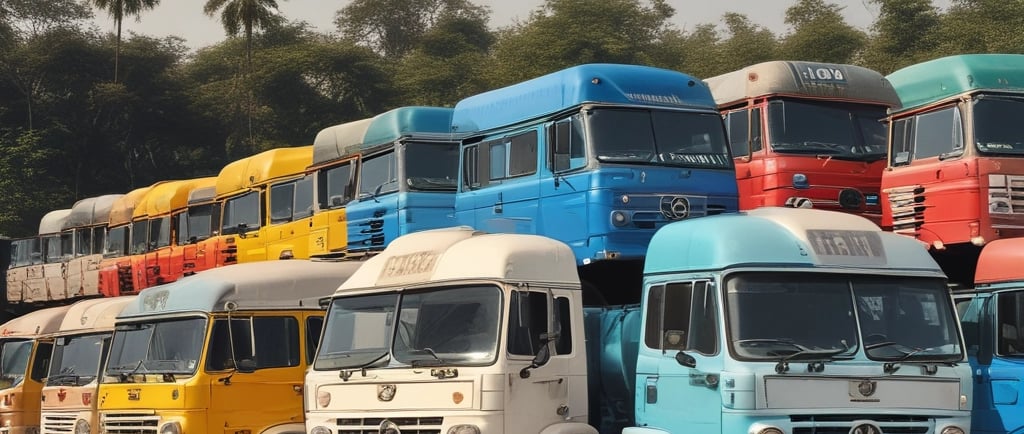
India’s road transport sector — the backbone of the nation’s economy — is facing mounting distress as lorry owners struggle under volatile fuel prices, rising maintenance costs, and intense market competition. While the Indian government maintains that freight rates should remain market-driven, truck owners and transport associations across states are increasingly calling for government intervention to fix a minimum national freight rate to ensure fair earnings and prevent exploitation.
At present, the Central Government does not fix freight rates for inter-state or long-haul transport. Rates are largely determined by market forces such as supply and demand, seasonal fluctuations, and diesel costs. This unregulated pricing system often leads to cut-throat competition, where transporters are forced to accept low-paying loads just to keep their vehicles running. Small lorry operators — who make up nearly 75% of India’s trucking industry — are the worst hit, as they lack bargaining power against large fleet owners and freight brokers.
Many lorry owners say that despite the steep rise in diesel, tyre, and insurance costs, freight charges have not kept pace. For example, while fuel prices have increased by nearly 40% over the past few years, freight rates on key routes have barely risen by 10–15%. “We can’t even cover operating expenses, let alone EMIs and driver wages,” said Ramesh Gowda, a lorry owner from Karnataka. “Without minimum freight protection, small operators are sinking in debt.”
Although the Motor Vehicles Act allows state governments to set minimum freight rates for intra-state transport, most states have not implemented such measures. Those that have — like Maharashtra and Tamil Nadu in certain segments — face challenges in enforcement and coordination, especially for goods that move across states. A state-level minimum rate also cannot apply to inter-state transport, which is governed by national laws and left to the open market.
Industry experts argue that fixing a national freight rate would help stabilize the transport economy and protect small operators. Transport unions have urged the government to consider a “National Freight Rate Board” similar to the Minimum Wage Board, which could periodically review and announce fair base rates for different routes and vehicle categories.
On the other hand, the government maintains that market-driven pricing ensures competition and efficiency. Officials point out that the focus should be on reducing logistics costs through better roads, faster clearances, and initiatives like the PM Gati Shakti Master Plan, rather than fixing prices. A central official noted, “Price control could distort competition and discourage private sector logistics investment.”
However, for India’s 90 lakh truckers, the debate is not about economics — it’s about survival. As freight margins shrink and operational costs surge, thousands of small lorry owners are finding it increasingly difficult to sustain their businesses. Unless freight rates become fair and viable, experts warn, India could soon face a shortage of independent truck operators, threatening the very supply chains that keep the country moving.