Navi Mumbai International Airport (NMIA): India’s Next Big Regional Cargo Hub
With cargo operations launched in December 2025, Navi Mumbai International Airport is no longer just a future vision—it is fast becoming a critical pillar of India’s logistics and trade infrastructure. Backed by modern facilities, excellent connectivity, and strong growth potential, NMIA is set to emerge as a leading regional and international air cargo hub, powering India’s next phase of economic expansion.
1/2/20263 min read
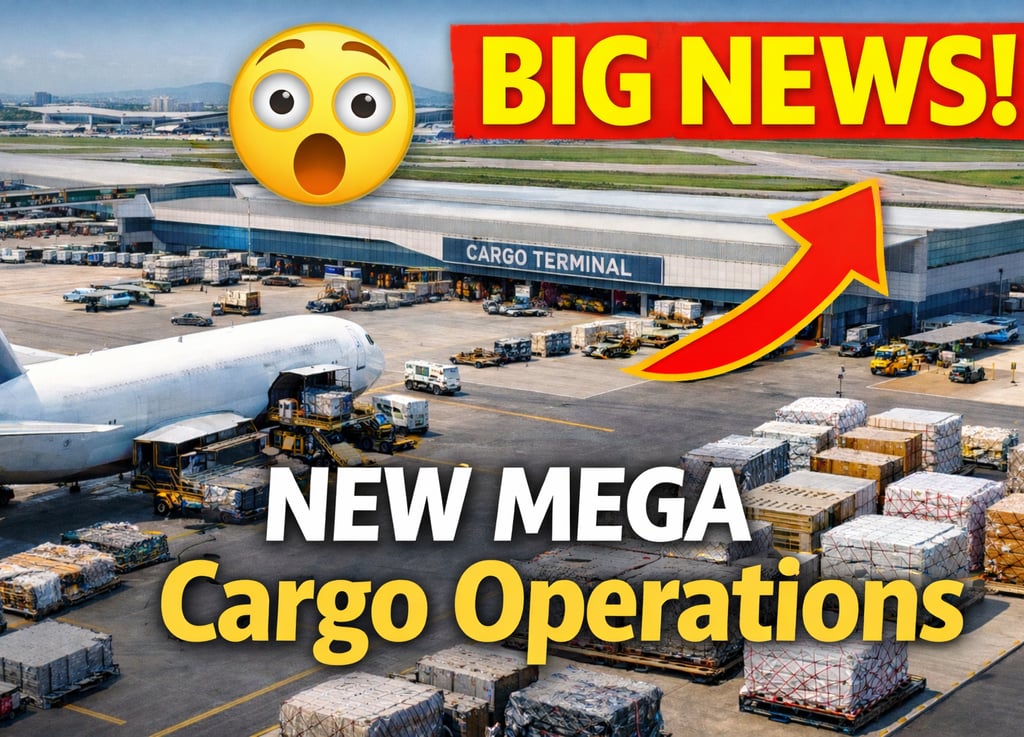
Navi Mumbai International Airport (NMIA) has officially entered India’s aviation and logistics landscape with the launch of commercial and domestic cargo operations in late December 2025. Designed as a world-class greenfield airport, NMIA is now rapidly scaling up to become a major regional cargo hub, easing pressure on Mumbai’s existing air cargo infrastructure and strengthening India’s position in global supply chains.
With modern cargo terminals, seamless multimodal connectivity, and proximity to key industrial zones, NMIA is expected to redefine air freight logistics in western India.
Strategic Importance of NMIA for Air Cargo
Mumbai has long been India’s busiest gateway for international trade. However, capacity constraints at the existing airport limited growth in cargo handling. NMIA addresses this challenge by offering:
Dedicated cargo infrastructure
Faster aircraft turnaround times
Reduced congestion
Scope for future expansion
Located close to JNPT Port, MIDC industrial belts, and major consumption centers, NMIA sits at the intersection of air–sea–road–rail logistics, making it ideal for high-value and time-sensitive cargo.
Key Cargo Infrastructure at NMIA
NMIA has been planned with cargo operations at its core rather than as an afterthought. The airport features:
1. State-of-the-Art Cargo Terminals
Modern domestic and international cargo terminals
Automated handling systems for faster processing
Cold-chain facilities for perishables and pharmaceuticals
2. Dedicated Cargo Aprons
Separate parking bays for freighters
Capability to handle wide-body cargo aircraft
Reduced congestion with passenger aircraft movements
3. Digital & Paperless Operations
E-AWB and digital customs integration
Real-time cargo tracking
Faster clearance and reduced dwell time
These features position NMIA among the most advanced cargo-ready airports in India.
Cargo Segments Driving Growth
NMIA’s cargo ecosystem is designed to serve multiple high-growth segments:
📦 E-commerce & Express Cargo
With India’s booming online retail sector, NMIA is emerging as a key hub for same-day and next-day deliveries across western and southern India.
💊 Pharmaceuticals & Healthcare
Maharashtra is a major pharma manufacturing hub. NMIA’s temperature-controlled facilities support:
Vaccines
Life-saving drugs
Medical equipment
🥭 Perishables & Agri-Exports
Fresh fruits, vegetables, seafood, and flowers can now reach global markets faster, benefiting farmers and exporters.
⚙️ Engineering & Auto Components
High-value engineering goods and auto parts from Pune, Nashik, and Aurangabad clusters gain faster air connectivity.
Connectivity Advantage: Multimodal Logistics Hub
One of NMIA’s biggest strengths is connectivity:
Road: Direct access to Mumbai–Pune Expressway and NH corridors
Rail: Planned freight rail connectivity
Sea: Close proximity to Jawaharlal Nehru Port Trust (JNPT)
This enables air–sea transshipment, reducing logistics costs and improving supply chain efficiency.
Impact on India’s Logistics & Economy
The scaling up of cargo operations at NMIA is expected to deliver multiple economic benefits:
Decongestion of Mumbai’s existing airport
Reduced logistics costs for exporters
Faster turnaround for imports and exports
Employment generation in warehousing, handling, and transport
NMIA aligns perfectly with national initiatives like Make in India, Gati Shakti, and PM Gati Shakti National Master Plan, which emphasize integrated infrastructure development.
Sustainability & Future-Ready Design
NMIA is built with a strong focus on sustainability:
Energy-efficient cargo terminals
Optimized ground movements to cut fuel usage
Scope for electric ground support equipment
As global trade increasingly values green logistics, NMIA’s eco-conscious design gives it a competitive edge.
Future Expansion Plans
Over the next few years, NMIA aims to:
Increase annual cargo handling capacity significantly
Attract global cargo airlines and integrators
Develop dedicated logistics parks and FTWZs (Free Trade Warehousing Zones)
Position itself as a South Asia air cargo transshipment hub
With phased development, NMIA can scale operations in line with demand without congestion.
Why NMIA Matters for Businesses & Transporters
For exporters, importers, freight forwarders, and transport operators, NMIA offers:
Faster cargo clearance
Lower handling delays
Better connectivity to markets
Cost-efficient logistics solutions
This makes NMIA a game-changer for India’s air cargo ecosystem.
SEO Keywords (Naturally Integrated)
Navi Mumbai International Airport cargo operations
NMIA cargo hub India
India air cargo infrastructure
Mumbai air freight logistics
New cargo airport in India
Regional air cargo hub India
Frequently Asked Questions (FAQs)
1. When did NMIA start cargo operations?
NMIA began commercial and domestic cargo operations in late December 2025.
2. Is NMIA handling international cargo?
Yes, NMIA is designed to handle both domestic and international air cargo, with scalable infrastructure.
3. How does NMIA help Indian exporters?
NMIA reduces congestion, speeds up cargo movement, lowers logistics costs, and provides faster global market access.
4. What types of cargo are handled at NMIA?
E-commerce goods, pharmaceuticals, perishables, engineering products, auto components, and express shipments.
5. How is NMIA connected to ports and highways?
NMIA is well-connected by major highways, planned rail links, and is close to JNPT Port, enabling multimodal logistics.
6. Will NMIA reduce pressure on Mumbai airport?
Yes, NMIA significantly decongests Mumbai’s existing airport, especially for cargo operations.