New LPG Cylinder Rules from May 1, 2026: OTP Delivery, Booking Gap, Price Updates Explained
The new LPG cylinder rules from May 1, 2026 mark a significant change in how cooking gas is booked and delivered in India. With mandatory OTP verification, increased booking gaps, possible price revisions, and stricter KYC norms, consumers must adapt quickly to avoid disruptions.
NEWS
4/28/20263 min read
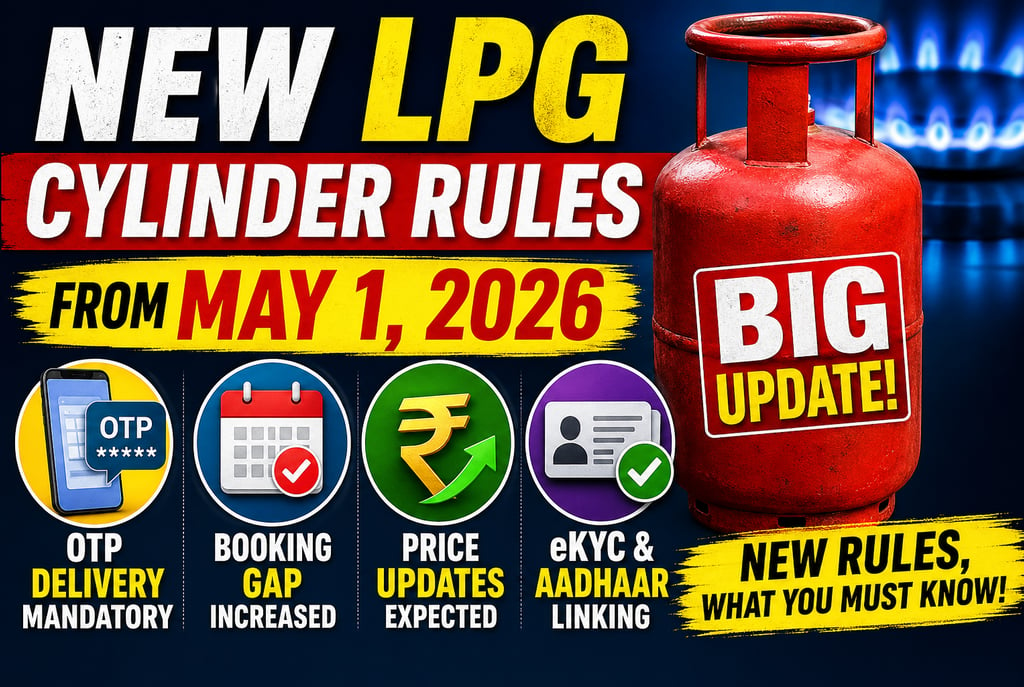
India is set to witness significant changes in LPG cylinder booking and delivery rules from May 1, 2026. These updates, introduced by oil marketing companies, aim to improve transparency, prevent misuse, and streamline the distribution system. However, they will also impact how millions of households book and receive their cooking gas.
If you are an LPG consumer using Indane, Bharat Gas, or HP Gas, it’s crucial to understand these new rules to avoid inconvenience.
Why Are LPG Rules Changing in 2026?
The changes come amid global supply disruptions and rising crude oil prices, which have affected LPG availability in India. The country consumes nearly 80,000 tonnes of LPG daily, while domestic production is much lower, forcing reliance on imports.
To ensure fair distribution and reduce black marketing, the government and oil companies are tightening rules around booking, delivery, and authentication.
1. OTP-Based LPG Cylinder Delivery Becomes Mandatory
One of the biggest changes is the mandatory OTP (One-Time Password) system for LPG delivery.
How It Works:
When you book an LPG cylinder, an OTP is sent to your registered mobile number
You must share this OTP with the delivery agent
Without OTP verification, the cylinder will not be handed over
This system (also called DAC – Delivery Authentication Code) ensures that cylinders are delivered only to genuine customers and helps prevent fraud or diversion.
👉 Important Tip: Make sure your mobile number is correctly linked to your LPG connection.
2. Increase in LPG Booking Gap (Refill Interval)
Another major change is the increase in the minimum gap between two LPG bookings.
New Booking Gap Rules:
Urban areas: Minimum 25 days
Rural areas: Up to 45 days
Earlier, consumers could book refills after 21 days. Now, the extended gap aims to prevent hoarding and panic booking.
Impact on Consumers:
You must plan your LPG usage carefully
Early booking is not allowed before the gap ends
Delayed booking may lead to cooking disruptions
3. LPG Cylinder Price Updates Expected
LPG prices are also expected to change from May 1 due to global energy market volatility.
Recent trends show:
Domestic LPG cylinder prices have already increased in recent months
Commercial cylinder prices have seen multiple hikes
Further revisions may happen depending on crude oil supply
Experts suggest that price fluctuations will continue, especially due to geopolitical issues affecting oil supply chains.
4. eKYC and Aadhaar Linking May Be Required
Another key update is the possible mandatory eKYC (Know Your Customer) verification for LPG users.
What This Means:
Linking Aadhaar with LPG connection
Completing biometric or digital verification
Ensuring customer identity is verified
Failure to complete eKYC could result in:
Delay in booking
Temporary suspension of LPG services
This step aims to eliminate fake or duplicate connections and improve system efficiency.
5. Focus on Digital Booking and Transparency
The new rules also push consumers towards online and digital booking methods.
Popular Booking Methods:
Mobile apps (MyLPG, distributor apps)
Online portals
SMS booking
IVRS calls
Consumers are advised to check their next eligible booking date online before placing an order.
This digital shift ensures:
Faster booking
Better tracking
Reduced human errors
6. Stricter Delivery Monitoring System
The government is also tightening delivery rules to ensure accountability.
Key Changes:
OTP verification mandatory for delivery
Increased monitoring of LPG distributors
Prevention of illegal resale or diversion
In some regions, delivery timelines are also being monitored strictly to avoid delays.
7. Impact on Common Consumers
These new LPG rules will directly affect households across India.
Positive Impacts:
✔ Reduced black marketing
✔ Transparent delivery system
✔ Improved supply management
Challenges:
❌ Longer waiting time between bookings
❌ Dependency on mobile OTP
❌ Possible price increase
What Should LPG Consumers Do Now?
To avoid any problems after May 1, follow these steps:
✅ Checklist for Consumers:
Update your mobile number with LPG provider
Complete eKYC/Aadhaar verification (if required)
Track booking eligibility date
Avoid last-minute bookings
Learn digital booking methods
Future of LPG in India
The government is gradually moving towards:
Digitised fuel distribution systems
Increased use of PNG (Piped Natural Gas) in cities
Reduced dependence on subsidies
While LPG will remain a key cooking fuel, these reforms indicate a shift towards more regulated and technology-driven distribution.
Conclusion
The new LPG cylinder rules from May 1, 2026 mark a significant change in how cooking gas is booked and delivered in India. With mandatory OTP verification, increased booking gaps, possible price revisions, and stricter KYC norms, consumers must adapt quickly to avoid disruptions.
These reforms aim to create a transparent, efficient, and fraud-free LPG distribution system, but they also require users to be more proactive and digitally aware
LPG cylinder new rules 2026
LPG booking rules May 1 India
OTP LPG delivery system
LPG booking gap 25 days
LPG price update 2026
gas cylinder new rules India
LPG eKYC Aadhaar linking