Ola Shakti: Ola Electric’s Leap into Home Energy Storage
This launch signifies a deliberate pivot by Ola Electric from being purely an EV-maker to becoming an end-to-end energy company. @mathrubhumi +3 mint +3 Moneycontrol +3 The move allows the company to tap into India’s fast-growing BESS market (estimated ~₹1 lakh crore opportunity) and support the broader energy transition.
10/16/20252 min read

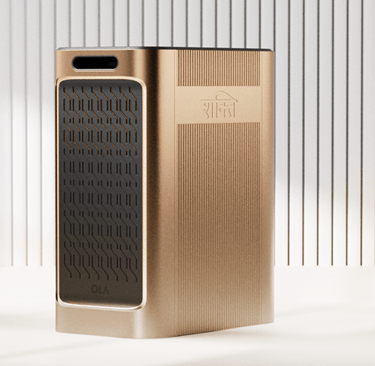
Bengaluru / New Delhi, October 16, 2025 — In a bold strategic move beyond electric scooters, Ola Electric today unveiled its first non-vehicle product, Ola Shakti, marking the company’s entry into the residential Battery Energy Storage Systems (BESS) market. @mathrubhumi+3mint+3Moneycontrol+3
What Is Ola Shakti?
Ola Shakti is designed as a modular, app-based energy storage platform for homes, small businesses, and farms. @mathrubhumi+3Ola Electric+3Moneycontrol+3 It aims to provide backup power during outages, complement solar generation, stabilise voltage, and offer smart load management — a level up from traditional inverters and diesel generators. @mathrubhumi+3Cartoq+3Moneycontrol+3
In short, it’s neither a basic inverter nor a small power-bank; it is a full-fledged battery system (BESS) that can store grid or solar electricity, and deliver it intelligently when needed. Cartoq+2Moneycontrol+2
Technical Specifications & Variants
At launch, Ola offers the device in four configurations:
1.5 kWh,
3 kWh,
5.2 kWh, and
Introductory pricing (for early units) is pegged at:
₹ 29,999 for 1.5 kWh,
₹ 55,999 for 3 kWh,
₹ 1,19,999 for 5.2 kWh,
₹ 1,59,999 for 9.1 kWh Moneycontrol+2mint+2
To reserve, customers can pre-book with ₹ 999. Deliveries are expected to begin around Makar Sankranti 2026. Moneycontrol+2mint+2
Ola states that its device uses its proprietary 4680 Bharat cell technology — the same cell line used (or under development) for its EV batteries — and will be manufactured leveraging its Tamil Nadu gigafactory. Moneycontrol+3mint+3Outlook Business+3
Additional features include:
Instant changeover (zero ms) to prevent downtime. Cartoq+1
Wide input voltage range (120V to 290V) to protect against fluctuation. Cartoq+2@mathrubhumi+2
IP67-rated battery modules (weatherproofing). @mathrubhumi+2Cartoq+2
App control & monitoring, scheduling, prioritisation of loads, energy health insights, and OTA updates. Ola Electric+2Cartoq+2
Claimed efficiency up to 98% in power conversion. Cartoq+1
Under full load, even the larger variants are designed to deliver about 1.5 hours of backup. Moneycontrol+1
Why This Matters: Strategy & Market Context
This launch signifies a deliberate pivot by Ola Electric from being purely an EV-maker to becoming an end-to-end energy company. @mathrubhumi+3mint+3Moneycontrol+3 The move allows the company to tap into India’s fast-growing BESS market (estimated ~₹1 lakh crore opportunity) and support the broader energy transition. mint+2@mathrubhumi+2
By using its existing manufacturing, cell development (4680 Bharat), and service/retail network built for scooters, Ola may gain economies of scale without building an entirely new infrastructure. Moneycontrol+3Outlook Business+3Cartoq+3
Ola’s shares reacted strongly to the announcement — hitting a 5% upper circuit on the day of the unveiling. The Economic Times+1
The product also addresses key Indian pain points: unreliable grid supply in many parts of the country, frequent power cuts, and the need for efficient backup systems that don’t rely on fuel or high maintenance. @mathrubhumi+2Cartoq+2
Challenges & Outlook
While ambitious, Ola Shakti faces hurdles. It must compete with established inverter & BESS providers, ensure safety and durability (battery fires, degradation risks), and manage supply chain constraints. The pricing — especially at scale and after early-unit discounts — will be closely watched.
Further, scaling it to commercial / grid-scale BESS systems is on Ola’s roadmap. The company hints at stacking capability and future B2B / grid containerised solutions. Moneycontrol+2mint+2