Tata 5530 Heavyweights Redefined: Diesel Power Meets Electric Future with the Prima E.55S EV
In summary, “5530” refers to a heavy-duty 55,000 kg GVW class; the Signa 5530.S and Prima 5530.S are diesel/LNG heavy trucks powered by Cummins ~6.7L engines (~224 kW / 300 hp) with ~40,000 kg payload capability, while the Prima E.55S EV is a distinct electric model using a PMSM motor and LFP battery packs (300 kWh / 450 kWh). Fleet choice between them should be driven by route profiles, infrastructure availability, payload needs and a careful TCO analysis specific to the operator’s network.
11/10/20252 min read
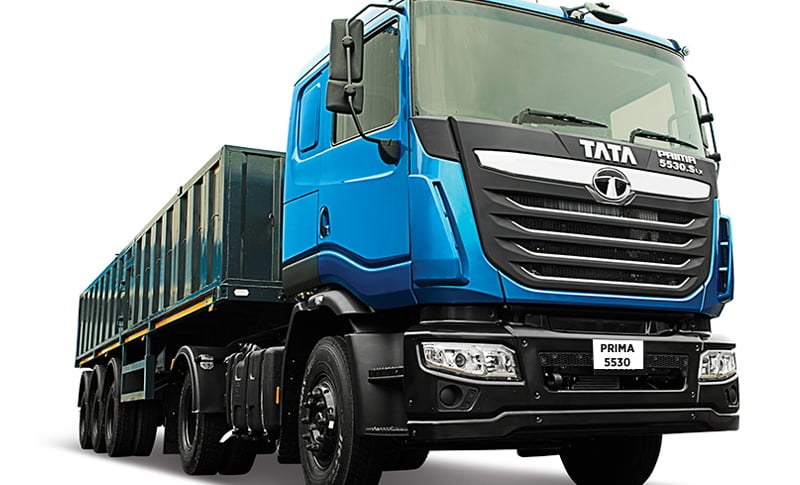
Tata’s “5530” designation is commonly associated with heavy-duty, 55-tonne gross vehicle weight (GVW) trucks — but it is important to distinguish clearly between the diesel/LNG models and Tata’s separate electric offering. The diesel/LNG variants are marketed under the Signa 5530.S (diesel) and Prima 5530.S (LNG) nameplates, while the electric alternative is the Prima E.55S EV — a distinct vehicle with different driveline architecture, energy source, and operational implications.
Tata Signa 5530.S / Prima 5530.S (Diesel / LNG)
The Signa 5530.S (diesel) and Prima 5530.S (LNG) are heavy-duty haulage platforms designed for high payload intercity and long-haul duties. Both have a GVW of 55,000 kg and are engineered to carry substantial payloads — typically around 40,000 kg depending on body fitment and regulatory constraints. Powering these trucks is a robust engine package: diesel or LNG-capable Cummins powerplants in the ~6.7-litre class (diesel variant often specified at ~6702 cc), delivering approximately 224 kW (≈300 hp). These engines and drivetrains are optimized for torque, durability and ease of service — attributes critical for operators running heavy loads over long distances with variable refuelling infrastructure. Fuel choice (diesel or LNG) affects operating cost, range, fueling logistics and emissions profile; LNG offers emissions advantages versus diesel and can lower fuel cost where LNG supply is available.
Tata Prima E.55S EV (Electric)
The Prima E.55S EV is Tata’s purpose-built electric heavy-duty truck in the same nominal GVW class but built around an electric driveline. It uses a permanent magnet synchronous motor (PMSM) instead of an internal combustion engine and stores energy in lithium iron phosphate (LFP) battery packs. Tata offers battery capacity options of approximately 300 kWh and 450 kWh — configurations that affect payload (battery weight), operational range, and charging needs. The E.55S platform represents a fundamentally different value proposition: lower tailpipe emissions, potentially lower energy cost per km, quieter operation and reduced maintenance complexity thanks to fewer moving parts.
Operational and commercial considerations
These two families suit different operating profiles. The diesel/LNG 5530.S trucks remain the pragmatic choice for long-range duties in regions with sparse charging infrastructure or for operations where refuelling speed and maximum payload are paramount. By contrast, the Prima E.55S EV is best suited to duty cycles where daily driving distances match the EV’s usable range, and where depot charging (or fast-charging corridors) is available—for city-to-city short-haul loops, last-mile distribution at high payloads, or fleet operations with planned charging windows.
Total cost of ownership (TCO) comparisons must consider purchase price, fuel/energy cost, maintenance, downtime, payload trade-offs (battery weight), and incentives. EVs typically show lower running and maintenance costs but require investment in charging infrastructure and potential operational changes to route planning and scheduling.
Conclusion
In summary, “5530” refers to a heavy-duty 55,000 kg GVW class; the Signa 5530.S and Prima 5530.S are diesel/LNG heavy trucks powered by Cummins ~6.7L engines (~224 kW / 300 hp) with ~40,000 kg payload capability, while the Prima E.55S EV is a distinct electric model using a PMSM motor and LFP battery packs (300 kWh / 450 kWh). Fleet choice between them should be driven by route profiles, infrastructure availability, payload needs and a careful TCO analysis specific to the operator’s network.