United States Announces Seizure of a Russian-Flagged Tanker: How Is This Possible Under International Maritime Law?
The seizure of a Russian-flagged tanker by the United States highlights how modern maritime law, sanctions enforcement, and global shipping are deeply interconnected. While international waters are free for navigation, they are not lawless. Ships must comply with international conventions, financial regulations, and sanctions regimes.
NEWS
1/7/20263 min read
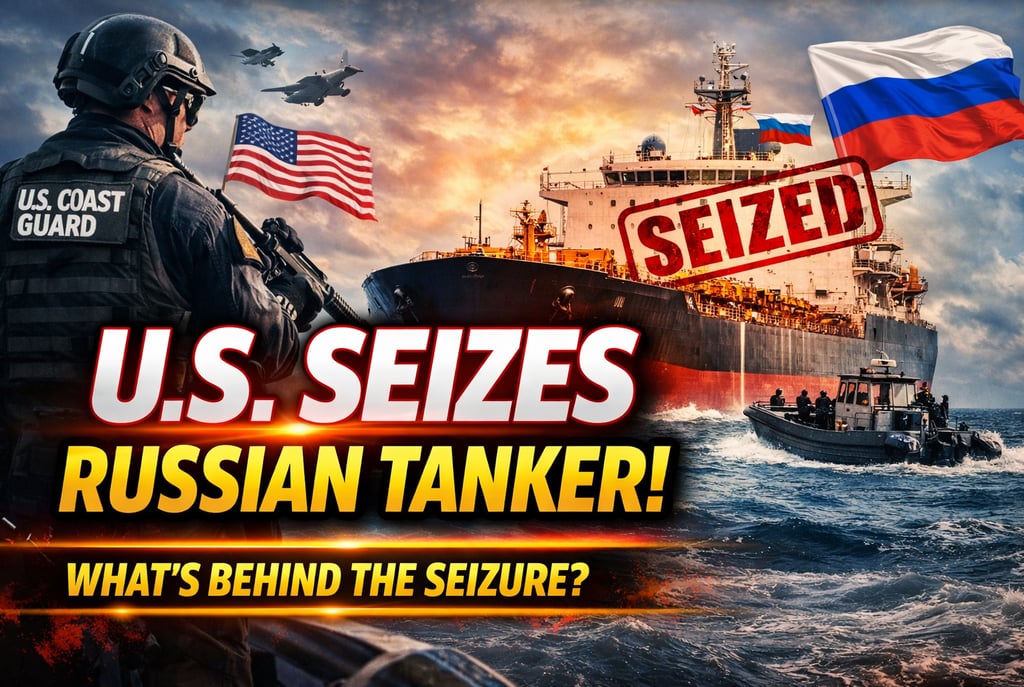
The recent announcement that the United States has seized a Russian-flagged oil tanker has once again brought global attention to maritime law, international waters, and the rules governing sea transportation. Such actions often raise serious questions: How can one country seize another country’s ship? Is it legal? What rules apply in international waters?
This article explains how the seizure is possible, the reasons behind it, how sea transportation works, what international waters are, and the rules and regulations for running a ship globally, using clear language and SEO-friendly structure.
Why Did the United States Seize a Russian-Flagged Tanker?
The seizure of a Russian-flagged tanker is not an act of piracy, nor is it a random show of force. It usually occurs under legal, economic, and geopolitical frameworks, especially during periods of sanctions and conflict involving Russia.
Main Reasons Behind Such Seizures
Violation of Economic Sanctions
The U.S., along with its allies, has imposed strict sanctions on Russian oil exports. If a tanker is found:Transporting sanctioned oil
Using falsified documents
Evading price caps
Conducting illegal ship-to-ship transfers
then authorities may legally seize the vessel.
Money Laundering & Financial Crimes
Tankers are often linked to shell companies. If the U.S. proves that shipping revenue passes through American banks or the U.S. dollar system, it gains jurisdiction.Insurance & Classification Fraud
Many Russian-linked vessels operate without valid insurance or falsify compliance with international safety and environmental standards.Port State Control Authority
If a tanker enters a U.S. port or allied port, it becomes subject to inspection and detention.
How Can the U.S. Legally Seize a Foreign Ship?
This is where international maritime law plays a crucial role.
Jurisdiction Is Not Always About Flag
Although ships sail under national flags, ownership, insurance, finance, and cargo routes often pass through multiple countries. The U.S. can assert authority if:
The ship enters U.S. territorial waters
The cargo violates U.S. sanctions laws
Transactions use U.S. banks or dollars
The ship is linked to criminal activity
The seizure is coordinated with international partners
Thus, a Russian-flagged tanker does not enjoy absolute immunity.
How Sea Transportation Works (Global Shipping Explained)
Sea transportation is the backbone of global trade, carrying over 80% of world commerce.
Key Elements of Maritime Shipping
Ship Owner – May differ from flag country
Flag State – Country where the ship is registered
Charterer – Company leasing the ship
Cargo Owner – Buyer or seller of goods
Port State – Country where ship docks
Insurance & Classification Society
A tanker may be Russian-flagged, Greek-owned, insured in London, financed in Singapore, and chartered by a Middle Eastern company—making it subject to multiple legal systems.
What Are International Waters?
Definition
International waters, also called the high seas, are areas of the ocean beyond 12 nautical miles from any country’s coastline.
No single country owns international waters, but this does not mean “no law applies.”
Rules Governing Ships in International Waters
Ships operating globally must follow international conventions, mainly enforced by:
Key Maritime Laws & Conventions
UNCLOS (United Nations Convention on the Law of the Sea)
Governs navigation rights, territorial waters, EEZs, and high seas.SOLAS (Safety of Life at Sea)
Ensures ship safety standards.MARPOL
Prevents marine pollution from ships.ISM Code
Requires safety management systems.Sanctions & Trade Laws
Imposed by individual countries or alliances.
Flag State Responsibilities
The country whose flag the ship flies must:
Ensure legal compliance
Certify crew and safety
Enforce international standards
If the flag state fails, port states and powerful maritime nations may intervene.
Can Ships Be Seized in International Waters?
Yes—but only under specific conditions:
Piracy
Human trafficking
Drug smuggling
Sanctions violations
Stateless vessels
Environmental crimes
In most cases, seizures happen after the ship enters territorial waters or ports, not in open seas.
Why Oil Tankers Are Closely Monitored
Oil tankers are high-risk vessels due to:
Environmental hazards
Sanctions evasion
Black-market oil trade
Ship-to-ship transfers at sea
Russian oil shipments have increasingly used:
“Dark fleet” tankers
AIS tracking shutdowns
Frequent flag changes
These raise red flags for maritime authorities.
Impact of the Seizure on Global Shipping
Short-Term Effects
Increased freight costs
Higher insurance premiums
Delays in oil deliveries
Long-Term Effects
Stronger enforcement of maritime laws
More transparency in tanker operations
Reduced sanctions evasion
Shipping companies worldwide are now tightening compliance to avoid similar actions.
Is This an Act of War?
No.
Such seizures are considered law enforcement actions, not military aggression. They fall under economic warfare and sanctions enforcement, a common modern geopolitical tool.
United States seizes Russian tanker
Russian oil tanker seizure
international waters maritime law
sea transportation rules
how shipping works internationally
oil tanker sanctions
maritime regulations international waters
UNCLOS shipping law
tanker seizure explained
Conclusion
The seizure of a Russian-flagged tanker by the United States highlights how modern maritime law, sanctions enforcement, and global shipping are deeply interconnected. While international waters are free for navigation, they are not lawless. Ships must comply with international conventions, financial regulations, and sanctions regimes.
As global geopolitics continues to reshape trade routes, compliance, transparency, and lawful operations are no longer optional for shipping companies—they are essential for survival in today’s international maritime system.