War Impact on India’s Logistics Sector: Challenges, Disruptions, and Emerging Opportunities
India’s logistics sector is evolving to become more self-reliant, technology-driven, and globally competitive. By investing in infrastructure, embracing digital transformation, and diversifying supply chains, the industry can not only withstand the effects of global conflicts but also emerge stronger in the long run.
LOGISTICS
4/1/20264 min read
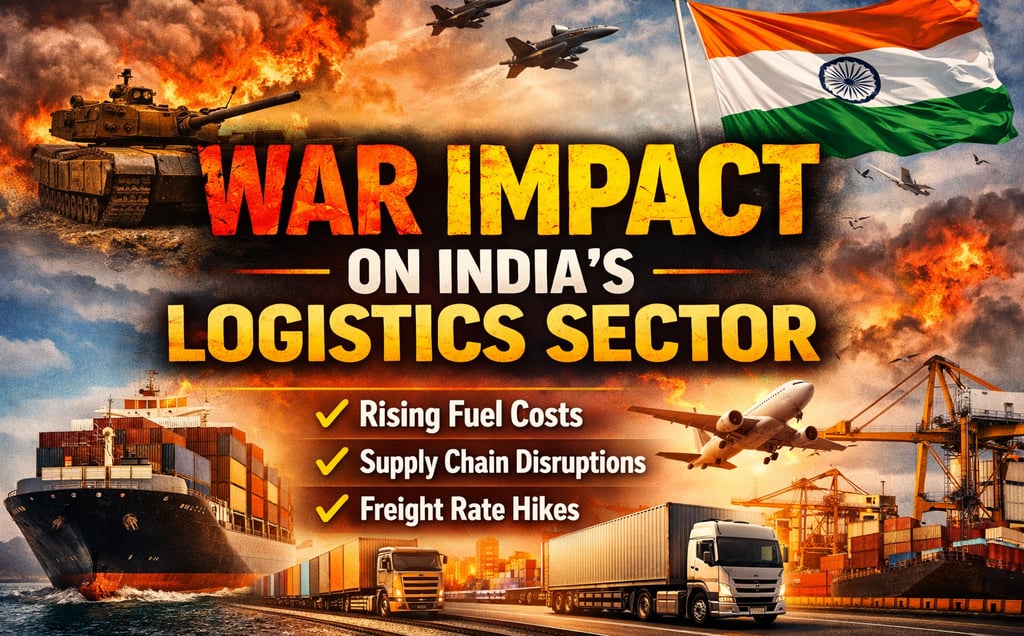
The logistics sector is the backbone of India’s economy, enabling the smooth movement of goods across states and international borders. However, global and regional conflicts have a significant impact on this sector, affecting supply chains, fuel prices, trade routes, and overall economic stability. In recent years, wars and geopolitical tensions have reshaped how logistics operates in India, forcing businesses to adapt quickly to changing conditions.
Rising Fuel Costs and Transportation Challenges
One of the most immediate effects of war is the sharp increase in fuel prices. Conflicts in oil-producing regions disrupt supply, leading to higher crude oil prices globally. For India, which imports a large portion of its fuel, this directly increases transportation costs.
Higher diesel and petrol prices affect trucking operations, shipping costs, and last-mile delivery expenses. Logistics companies are forced to either absorb the additional cost or pass it on to customers, leading to inflation in goods prices. Small transport operators, especially in the trucking industry, face the biggest challenge as their profit margins shrink significantly.
Supply Chain Disruptions
War often disrupts international supply chains, causing delays in imports and exports. India relies on several countries for raw materials, machinery, fertilizers, and electronic components. When conflict affects these regions, shipments are delayed or halted entirely.
Ports become congested, shipping routes are diverted, and transit times increase. This leads to inventory shortages in industries such as manufacturing, construction, and agriculture. For example, delays in fertilizer imports can directly impact farmers and agricultural productivity.
Impact on Sea and Air Routes
Global conflicts can make certain sea routes unsafe or restricted. Shipping companies may avoid high-risk areas, leading to longer routes and increased freight costs. For India, this can affect trade through major routes such as the Suez Canal or other strategic maritime corridors.
Similarly, air cargo operations are impacted when airspace restrictions are imposed. Flights are rerouted, increasing fuel consumption and delivery times. High-value and time-sensitive goods like electronics, pharmaceuticals, and perishables are particularly affected.
Increased Freight Rates
Freight charges rise significantly during times of war due to increased demand, risk premiums, and operational challenges. Shipping companies and logistics providers add surcharges to cover risks such as insurance, security, and delays.
Container shortages may also occur, as global movement becomes uneven. This leads to higher costs for exporters and importers in India, reducing competitiveness in international markets.
Insurance and Risk Management Costs
War increases uncertainty, leading to higher insurance premiums for cargo and transportation. Logistics companies must invest more in risk management, including route planning, safety measures, and contingency strategies.
Marine insurance costs, in particular, can rise sharply if ships pass through conflict zones. These additional costs further strain logistics budgets and impact pricing for end consumers.
Domestic Logistics Pressure
While international logistics faces disruption, domestic logistics also experiences pressure. As imports become uncertain, demand for locally sourced goods increases. This leads to higher movement of goods within India, putting pressure on road and rail networks.
E-commerce and essential goods distribution may face delays due to increased demand and limited transportation resources. Warehousing capacity may also be stretched as companies stockpile goods to manage uncertainty.
Opportunities for Indian Logistics Sector
Despite the challenges, war also creates new opportunities for India’s logistics industry. Companies are now focusing on diversification of supply chains, reducing dependence on specific countries. This encourages the development of domestic manufacturing and “Make in India” initiatives.
India can also emerge as an alternative global supply chain hub. As companies look to shift operations away from conflict-affected regions, India’s logistics infrastructure becomes increasingly important.
Investment in logistics parks, digital tracking systems, and multimodal transport solutions is growing. The government is also pushing initiatives like dedicated freight corridors, improved highways, and port modernization to strengthen the sector.
Digital Transformation and Resilience
War has accelerated the adoption of technology in logistics. Companies are investing in digital platforms for real-time tracking, route optimization, and predictive analytics. These tools help manage disruptions more efficiently and reduce operational risks.
Automation in warehouses, use of artificial intelligence, and blockchain for supply chain transparency are becoming more common. These advancements improve efficiency and build resilience against future disruptions.
Government Policies and Strategic Planning
The Indian government plays a crucial role in mitigating the impact of global conflicts on logistics. Strategic reserves of fuel, diversification of import sources, and strengthening diplomatic trade relations help reduce dependency on any single region.
Policies aimed at improving infrastructure, such as the National Logistics Policy, aim to reduce logistics costs and improve efficiency. These efforts are essential to counter the negative effects of global instability.
Impact on Export and Import Businesses
Exporters in India face challenges such as increased costs, delayed shipments, and uncertain demand from international markets. Importers, on the other hand, struggle with supply shortages and higher procurement costs.
Small and medium enterprises (SMEs) are particularly vulnerable, as they have limited capacity to absorb rising costs. However, businesses that adapt quickly by diversifying suppliers and optimizing logistics strategies can survive and even grow.
Conclusion
War has a profound impact on India’s logistics sector, creating both challenges and opportunities. Rising fuel prices, disrupted supply chains, increased freight costs, and operational uncertainties pose significant hurdles. At the same time, the situation encourages innovation, resilience, and strategic growth.
India’s logistics sector is evolving to become more self-reliant, technology-driven, and globally competitive. By investing in infrastructure, embracing digital transformation, and diversifying supply chains, the industry can not only withstand the effects of global conflicts but also emerge stronger in the long run.
For businesses and stakeholders, the key lies in adaptability and proactive planning. As global uncertainties continue, a resilient and efficient logistics system will be essential for India’s economic growth and stability.